ENGINEPublishing systemEngines family

Book Creation Engine

Take a book idea through a governed sixteen-stage pipeline to a publishing-ready book — with approval gates, continuity controls and quality checks between every stage.

Overview

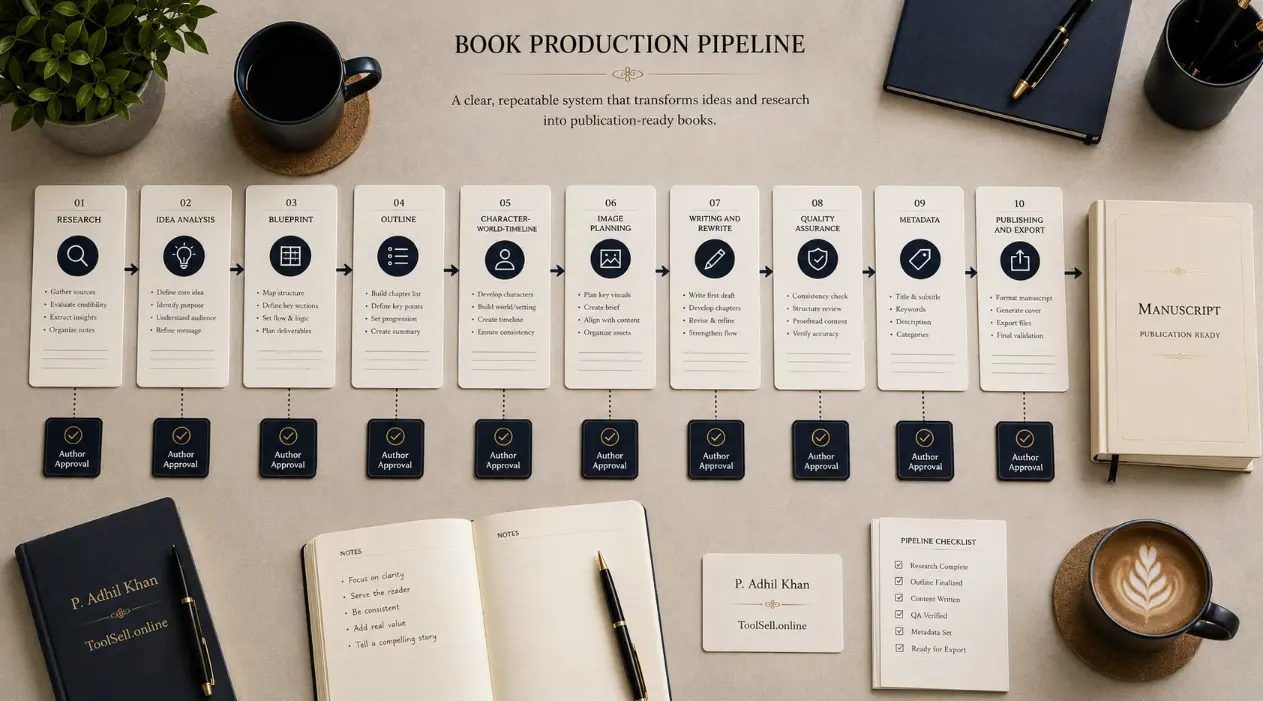
Book Creation Engine is a governed multi-stage book production system. It takes a book idea and runs it through sixteen sequential engines, ending in a defined terminal state: a Publishing Ready Book.

It is not an AI writer and it is not “one prompt creates a book”. The engine owns the production process — research, structure, continuity, drafting, revision, quality assurance, metadata and export — and requires approved upstream outputs before dependent stages begin.
Governed Book-Production Pipeline

  1. ResearchMarket & reader analysis
  2. PlanningBlueprint & chapter map
  3. WritingStage-by-stage drafting
  4. ContinuityWorld & character gates
  5. QAAuthor approval audit
  6. ExportPublication-ready book
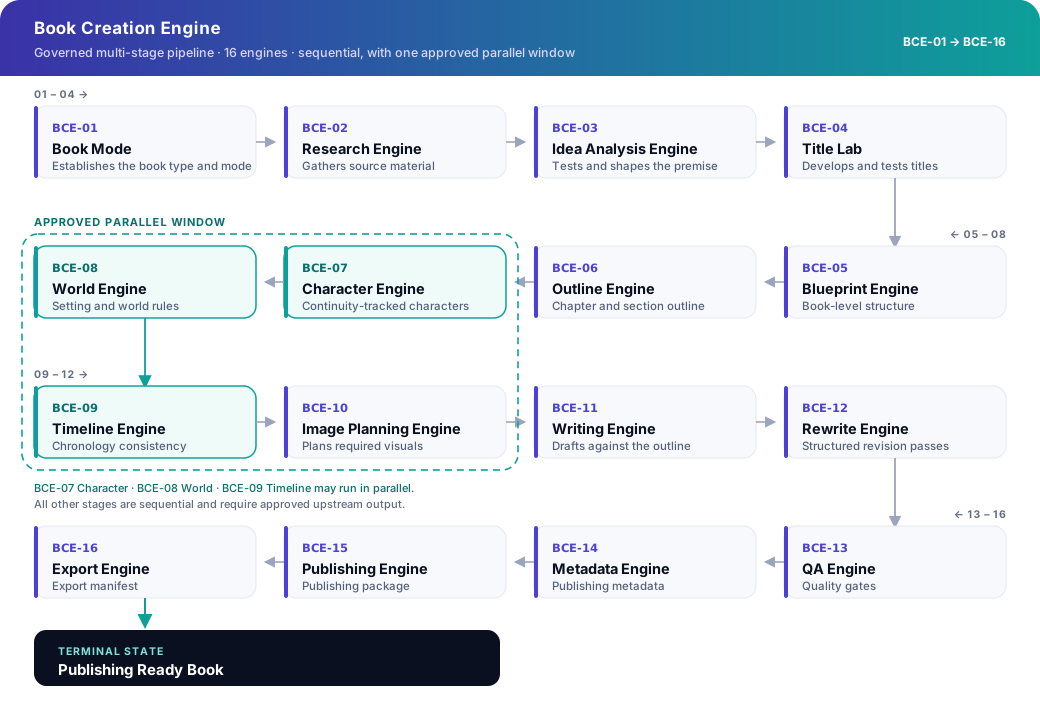
Diagram of the Book Creation Engine pipeline: BCE-01 Book Mode, BCE-02 Research Engine, BCE-03 Idea Analysis Engine, BCE-04 Title Lab, BCE-05 Blueprint Engine, BCE-06 Outline Engine, BCE-07 Character Engine, BCE-08 World Engine, BCE-09 Timeline Engine, BCE-10 Image Planning Engine, BCE-11 Writing Engine, BCE-12 Rewrite Engine, BCE-13 QA Engine, BCE-14 Metadata Engine, BCE-15 Publishing Engine and BCE-16 Export Engine, terminating in a Publishing Ready Book. Character, World and Timeline sit inside an approved parallel window.
The sixteen-engine pipeline. Engines 07–09 may run in an approved parallel window; all other stages are sequential.
Primary class
ENGINE
Family
Engines
Engines
16
Terminal state
Publishing Ready Book

Problem solved

Long-form book production breaks down over distance. Characters drift, timelines contradict each other, terminology changes between chapters, and the manuscript reaches the end without the metadata or publishing package needed to release it.

Book Creation Engine removes that drift by making the process explicit and sequential. Each stage consumes approved outputs from the stage before it, continuity is tracked rather than remembered, and the pipeline terminates in a package that is ready to publish.

Who it is for

  • Authors producing long-form fiction or non-fiction who need structural and continuity discipline across a whole manuscript.
  • Independent publishers and small studios running more than one title and needing a repeatable production process.
  • Creator-led projects where the book is one asset in a wider product ecosystem.

It is not intended for a single short piece of writing, a one-off article, or work with no publishing outcome.

Visual overview

Book Creation Engine
Take a book idea through a governed sixteen-stage pipeline to a publishing-ready book — with approval gates, continuity controls and quality checks between every stage.

The 16 engines

The pipeline is sequential. Each engine produces an approved output that the next engine consumes — nothing downstream is built on an unapproved assumption.

Pipeline rule

The pipeline is sequential except for one approved parallel window covering the Character, World and Timeline engines. Approved upstream outputs are required before dependent stages begin, and missing inputs are requested — they are not silently assumed.

Engine reference

  1. Book Mode
  2. Research Engine
  3. Idea Analysis Engine
  4. Title Lab
  5. Blueprint Engine
  6. Outline Engine
  7. Character Engine
  8. World Engine
  9. Timeline Engine
  10. Image Planning Engine
  11. Writing Engine
  12. Rewrite Engine
  13. QA Engine
  14. Metadata Engine
  15. Publishing Engine
  16. Export Engine
All sixteen engines, in pipeline order.
ID Engine Purpose
BCE-01 Book Mode Establishes the book type and production mode
BCE-02 Research Engine Gathers and consolidates source material
BCE-03 Idea Analysis Engine Tests and shapes the premise
BCE-04 Title Lab Develops and evaluates titles
BCE-05 Blueprint Engine Defines book-level structure
BCE-06 Outline Engine Produces the chapter and section outline
BCE-07 Character Engine Builds continuity-tracked characters (parallel window)
BCE-08 World Engine Establishes setting and world rules (parallel window)
BCE-09 Timeline Engine Maintains chronology consistency (parallel window)
BCE-10 Image Planning Engine Plans the visuals the book requires
BCE-11 Writing Engine Drafts against the approved outline
BCE-12 Rewrite Engine Runs structured revision passes
BCE-13 QA Engine Applies quality gates to the manuscript
BCE-14 Metadata Engine Produces publishing metadata
BCE-15 Publishing Engine Prepares the publishing package
BCE-16 Export Engine Produces the export manifest

Real workflow

The documented workflow runs in this order:

  1. Book mode
  2. Research
  3. Idea analysis
  4. Title
  5. Blueprint
  6. Outline
  7. Character · World · Timeline
  8. Image planning
  9. Writing
  10. Rewrite
  11. QA
  12. Metadata
  13. Publishing
  14. Export
  15. Publishing Ready Book

Key features

Governance and control

  • Approval gates — downstream stages do not begin on unapproved upstream output.
  • Manuscript contract — the agreed scope and constraints for the book are recorded.
  • Per-book workspaces — each book is produced in its own governed workspace.

Continuity

  • Character, world and timeline consistency — tracked as structured state, not held in memory.
  • Terminology lock — names and terms stay fixed across the manuscript.

Delivery quality

  • QA layers — quality gates applied before the manuscript advances.
  • Publishing package preparation — the assets a release requires.
  • Export manifests and checksums — the delivered output is verifiable.

What’s included

Sixteen engine folders

One per pipeline stage, from Book Mode through to Export — so the material for each stage is separate and traceable.

Nine documentation guides

Engine usage, project setup, prompt engineering, AI tool integration, feature reference, project template, best practices, FAQ and quick start.

Architecture references

An architecture overview, an engine index, a dependency graph showing how stages relate, and an engine integration guide.

Continuity references

The manuscript contract, the novel bible and the knowledge-memory engine — the structures that keep a long manuscript consistent.

Operating documents

A user manual, a developer guide, a quick start and a worked example workflow.

Governance and roadmap

The business system definition, version registry and an enterprise roadmap for the next stage of the product.

Product format

The downloadable/document-based engine remains a valid product format. An optional interactive interface may be provided in future as an execution layer — it would not replace the engine itself.

For a breakdown of how this documentation is organised, see Documentation.

Requirements & compatibility

Intended input
A book idea plus any source material the book depends on.
Output
A Publishing Ready Book, with a publishing package and export manifest.
Format
Document-based engine. An optional interactive interface may follow.
Documentation included
Nine guides covering engine usage, project setup, prompt engineering, tool integration, feature reference, templates, best practices, FAQ and quick start.
Technical requirements
Markdown-compatible text editor or workspace; optional Python runtime for export utilities.

Full package contents are summarised on Documentation.

Examples & usage

The worked workflow evidence below demonstrates the Book Creation Engine production lifecycle across genuine project artifacts. The pipeline enforces a disciplined progression: Research → Evidence & content inputs → Book architecture → Staged production → Chapter-level QA → Consistency review → Final publishing package. Rather than relying on a fabricated single screen, the panels below showcase real book deliverables engineered through BCE alongside the verified release archive.

PUBLISHED MANUSCRIPT DELIVERABLE
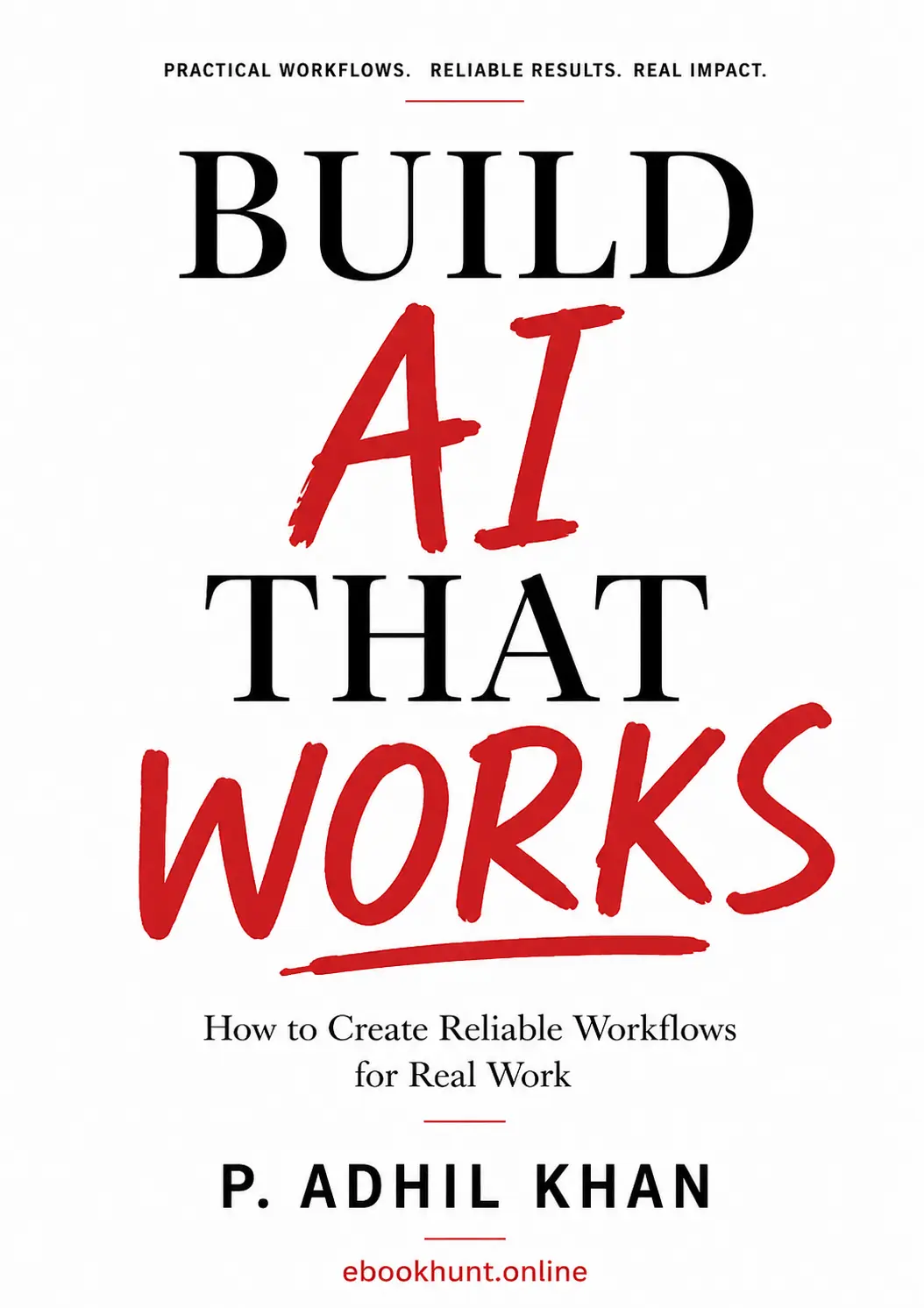
Book cover of Build AI That Works, engineered using the Book Creation Engine.

Engineered Manuscript: Build AI That Works

Technical manuscript deliverable produced using the Book Creation Engine 16-stage pipeline and structured quality gates.

Genuine publication deliverable · Work by P. Adhil Khan
STRUCTURED BOOK ARCHITECTURE
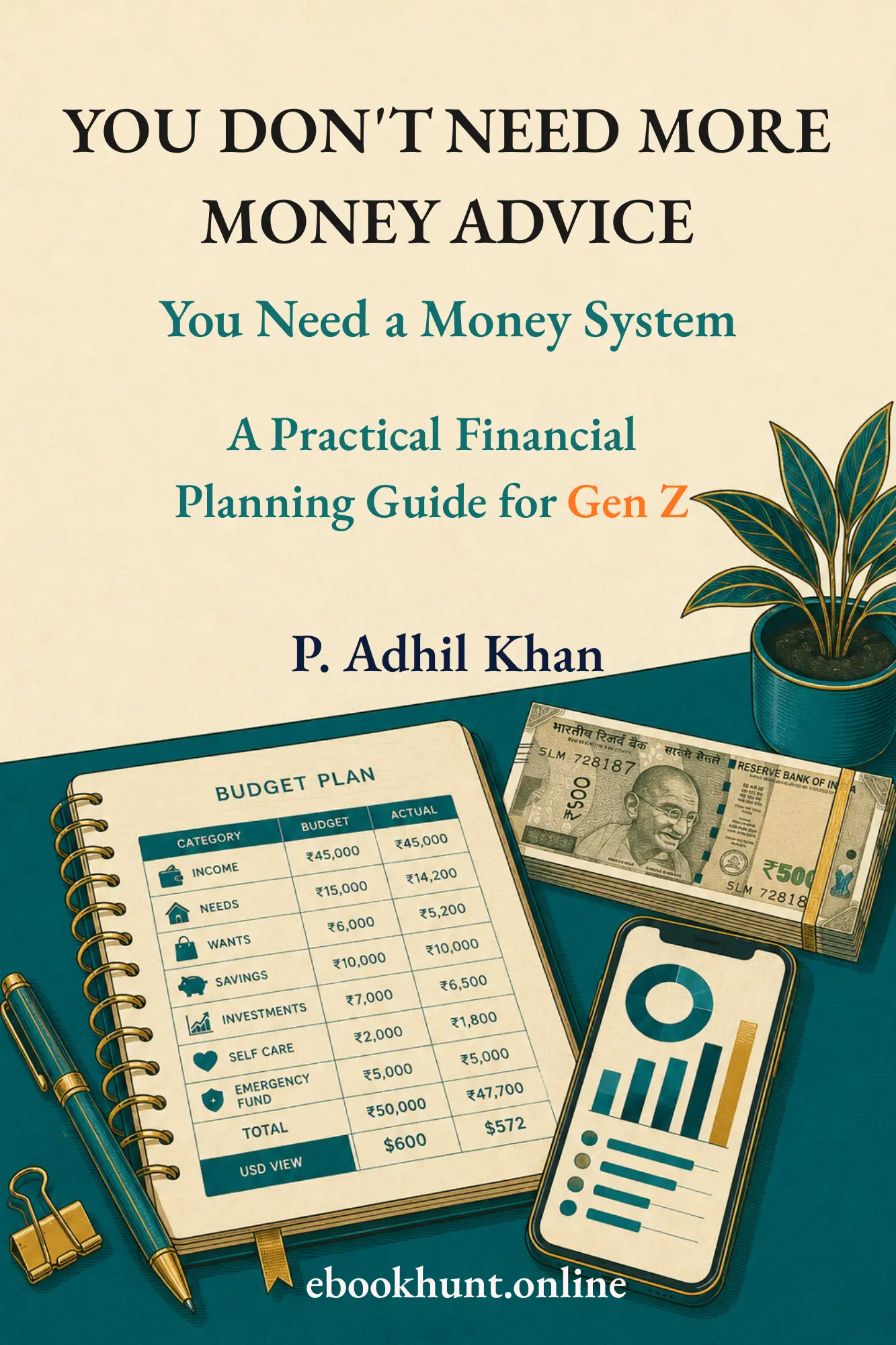
Book cover of You Don't Need More Money Advice, produced via Book Creation Engine.

Structured Narrative: You Don't Need More Money Advice

Complete manuscript architecture, chapter outlines, and continuity validation executed through BCE staged production.

Genuine publication deliverable · Work by P. Adhil Khan
VERIFIED ARCHIVE · 373 KB
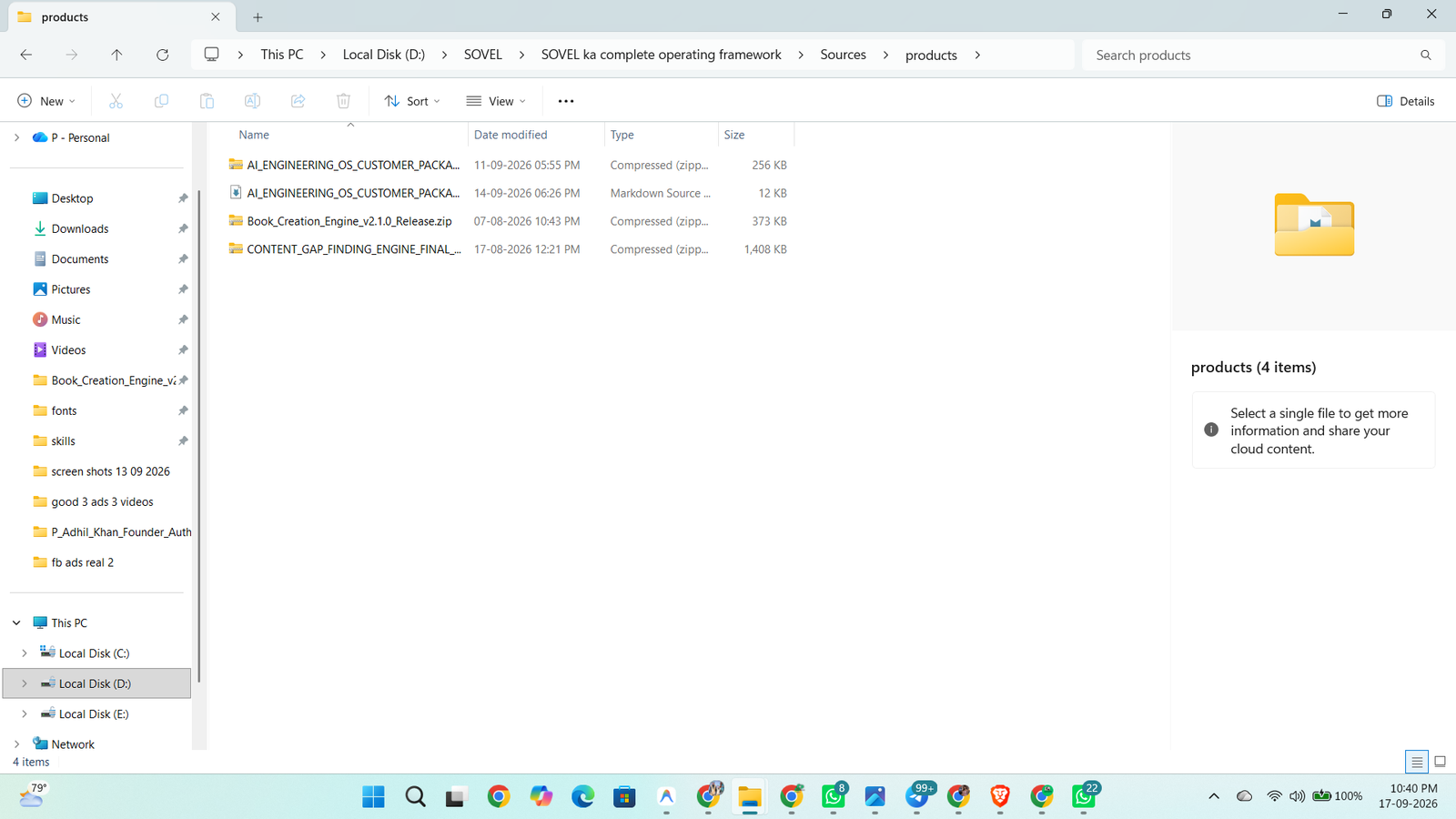
Windows Explorer showing Book Creation Engine v2.1.0 release package archive.

BCE v2.1.0 Release Package & Workspaces

Windows Explorer showing Book_Creation_Engine_v2.1.0_Release.zip (373 KB) alongside the core SOVEL customer archives.

Windows file system view · Sources\products\Book_Creation_Engine_v2.1.0_Release.zip

Pricing, licensing & delivery

₹4,999 One-time investment · Lifetime commercial license
VERIFIED RELEASE
  • Digital delivery: Instant customer ZIP download containing 16 engine workspaces, continuity bibles, prompt sets, and publishing export tools.
  • Commercial use: Deploy across personal, client, and production software projects without recurring subscription fees.
  • Governed structure: Package includes verified checksums, rulebooks, prompts, workflows, and executable checklists.
  • Support & updates: Direct access to official SOVEL documentation, changelog records, and customer support.

Versions

Book Creation Engine follows a freeze discipline: a released version is not edited in place. Changes become a new version, and the previous release is preserved rather than overwritten.

A frozen baseline release exists, and a successor version has been prepared. Which version becomes the public release — and on what delivery and upgrade terms — is not yet decided, so no public version number or release date is published here.

Public version not yet announced

Documentation

Comprehensive package documentation is included directly within the product archive. This product page serves as the public documentation and specification surface, with indexed platform guidance on Documentation.

Package documentation included

Changelog

Version history and release notes are maintained directly in the product package changelog. The current release represents the active stable build (v1.0.0+), with lifetime 1.x maintenance updates included.

Active release

Support

Customer support and technical inquiries are handled directly via support@sovel.pro. Review coverage guidelines, requirements, and triage workflows on Support & contact.

FAQ

Is this an AI book writer?

No. It is a governed production system. Writing is one stage (BCE-11) inside a sixteen-engine pipeline that also handles research, structure, continuity, quality assurance, metadata and export.

Can I skip stages?

No. The pipeline is sequential, with one approved parallel window for the Character, World and Timeline engines. Dependent stages require approved upstream outputs.

What happens if an input is missing?

The missing input is requested. It is not silently assumed or invented.

What do I get at the end?

A Publishing Ready Book, together with a publishing package and an export manifest.

Can I buy it now?

Yes. Book Creation Engine is available for direct purchase at ₹4,999 (INR) with instant digital delivery of the 16 engine workspaces, bibles, and export tools.

Builder

Book Creation Engine is built by P. Adhil Khan.

See the rest of the platform.

The product library shows each family, what it is for, and how the documented products actually work.