
research to book workflow architecture provides the foundational methodology for transforming disorganized research materials into a structured, evidence-led non-fiction book. Authors and researchers frequently struggle to bridge the gap between preliminary notes and polished manuscript chapters, often resulting in lost source citations, blurred factual distinctions, and unverified assertions. By implementing a governed research to book workflow, creators can systematically categorize evidence, lock chapter topics, and ensure that every drafted paragraph traces directly back to verified primary sources.
When supported by disciplined project governance, a structured research to book workflow allows authors to complete an evidence-dense 50,000-word volume within an 8-hour sprint while maintaining complete academic and factual integrity.
The Breakdown Between Source Gathering and Manuscript Drafting
Most non-fiction projects fail during the translation phase between gathering source notes and authoring chapters. Authors often amass hundreds of pages of interview transcripts, scientific articles, and historical archives, only to feel overwhelmed when sitting down to write.
When attempting this transition using standard artificial intelligence tools, three major hazards emerge:
- Evidence Dissolution: Detailed statistics and specific dates from your research get replaced with vague generalizations as the model improvises prose.
- Attribution Confusion: The model mixes quotes from different historical figures or attributes findings from one scientific study to another researcher.
- Unsupported Deductions: The drafting agent introduces causal claims that sound plausible but are nowhere supported in your original research materials.
A professional research to book workflow prevents these vulnerabilities by establishing a formal evidence control layer. Rather than asking a language model to synthesize massive stacks of raw notes on the fly, the workflow structures research into modular evidence dossiers before any chapter drafting begins.
This disciplined methodology powers the SOVEL Omni-Agent Engine, where research is treated as an immutable constraint. By locking evidence to specific chapter subsections, the system prevents models from drifting into unverified claims.
Step 1: Systematic Source Gathering and Document Ingestion
The first step of an effective research to book workflow is establishing a clean, isolated repository for all primary materials on your local hard drive.
* Gather Primary Literature: Assemble original research papers, peer-reviewed journals, archival records, survey data, and expert interviews. Cross-reference academic identifiers using metadata registries like Crossref DOI Registry to confirm publication integrity.
* Text Extraction and Normalization: Convert PDFs and scans into clean markdown text files, ensuring that footnotes, tables, and numerical data are preserved accurately.
* File-Naming Standardization: Assign clear, standardized filenames (such as source-01-forer-1949.md or source-02-crease-morphology.md) to facilitate rapid cross-referencing.
* Source Provenance Records: Record metadata for every document, including original publication dates, authors, institutional affiliations, and digital object identifiers (DOIs) where available.
By organizing source documents into a dedicated research directory, your research to book workflow ensures that drafting models draw exclusively from your curated evidence pool rather than open-ended training data.
Step 2: Multi-Model Information Extraction and Gap Analysis
Once source materials are assembled, the research to book workflow processes documents through multiple independent artificial intelligence models to extract key findings and uncover blind spots.
* Cross-Model Synthesis: Feed research dossiers into distinct reasoning platforms (such as ChatGPT, Claude, and Gemini) to synthesize core themes, methodological limitations, and statistical baselines.
* Comparative Evaluation: Compare outputs across models to identify where interpretations diverge or where critical details were overlooked.
* Content Gap Identification: Determine what questions existing books in your niche fail to address. These identified content gaps provide the unique value proposition for your upcoming publication.
* Methodological Assessment: Evaluate the strength of empirical studies, identifying whether findings represent small preliminary trials or large-scale randomized evaluations.
This multi-model extraction phase ensures that your research to book workflow uncovers fresh insights and avoids repeating conventional industry clichés.
Step 3: Establishing the Master Evidence Map
The cornerstone of a rigorous research to book workflow is constructing a Master Evidence Map. This document acts as an explicit bridge between your source files and your planned manuscript architecture.
Your Master Evidence Map must contain:
- Subsection Mapping: Every planned chapter section is assigned 2 to 4 primary evidence points that it must present.
- Direct Source Anchors: Specific page numbers, author names, publication dates, and study titles are permanently bound to section outlines.
- Quotation Registers: Exact historical quotes are locked into the map to prevent models from paraphrasing or misattributing statements.
- Statistical Locks: Numerical figures, sample sizes, and percentage findings are explicitly recorded to prevent numerical hallucination during writing passes.
When operating an evidence-driven research to book workflow, drafting agents are constrained to discuss only the data points explicitly authorized in the map, effectively preventing factual hallucination.
Step 4: Formulating Claim Prohibition Registers
A critical innovation in a modern research to book workflow is the creation of a Claim Prohibition Register. In non-fiction writing, defining what the book cannot say is just as important as defining what it covers.
Your prohibition register should catalog:
* Common Popular Myths: Pseudoscience assertions, folk beliefs, or outdated theories that the manuscript must actively challenge rather than endorse.
* Unsubstantiated Causal Links: Hypotheses that lack rigorous empirical backing, forbidding the drafting agent from presenting correlations as settled facts.
* Sensitive Terminology Boundaries: Explicit guidelines restricting exaggerated medical or psychological claims.
* Discredited Studies: Methodologically flawed historical studies that should not be cited as credible evidence.
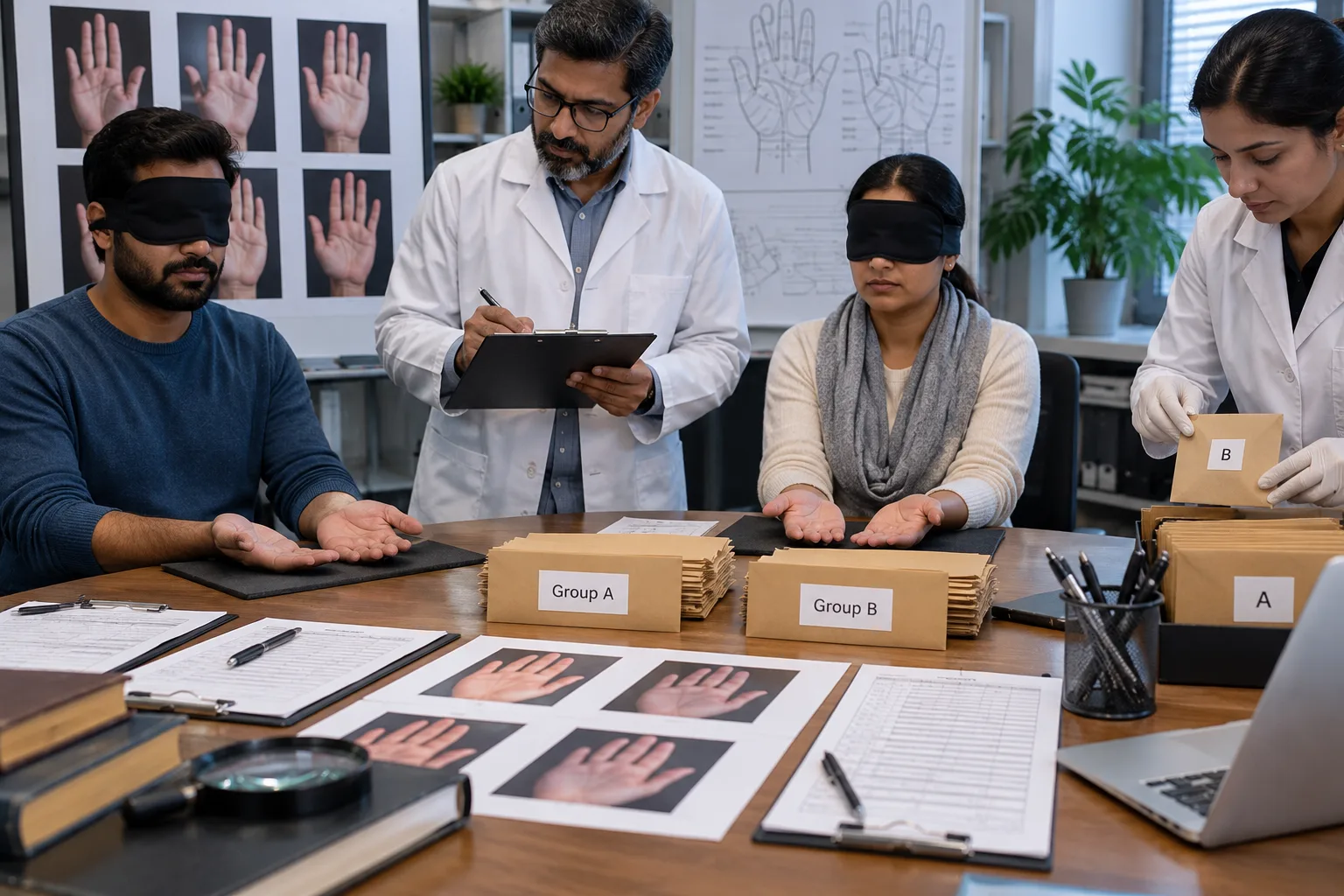
During the controlled production run of The Palmistry Illusion, the underlying research to book workflow enforced 11 explicit claim prohibitions regarding medical palm reading. When an early draft touched upon traditional fortune-telling claims, the engine blocked progression until the text explicitly distinguished folklore from biological reality.
Step 5: Structuring Chapter Outlines Around Evidence Units
In a conventional outline, chapters are organized by broad thematic ideas. In an engineered research to book workflow, chapters are structured around discrete units of evidence.
* Evidence-Led Subsections: Each chapter is divided into 4 to 6 numbered subsections, where each subsection answers a specific empirical question (for example, What do twin studies reveal about palmar creases?).
* Calibrated Word Budgets: Assign specific word counts (such as 600 words for Subsection A, 800 words for Subsection B) based on the depth of available evidence.
* Pre-Drafting Review: Verify that every subsection possesses sufficient documented source material to hit its word target without resorting to superficial padding.
* Chapter Transition Gates: Ensure that the logical conclusion of one evidence unit naturally sets up the empirical inquiry of the subsequent section.
By organizing your chapter outlines around concrete evidence blocks, the research to book workflow guarantees that every page delivers dense, informative value to the reader.
Step 6: Governed Drafting Sprints with Source Constraints
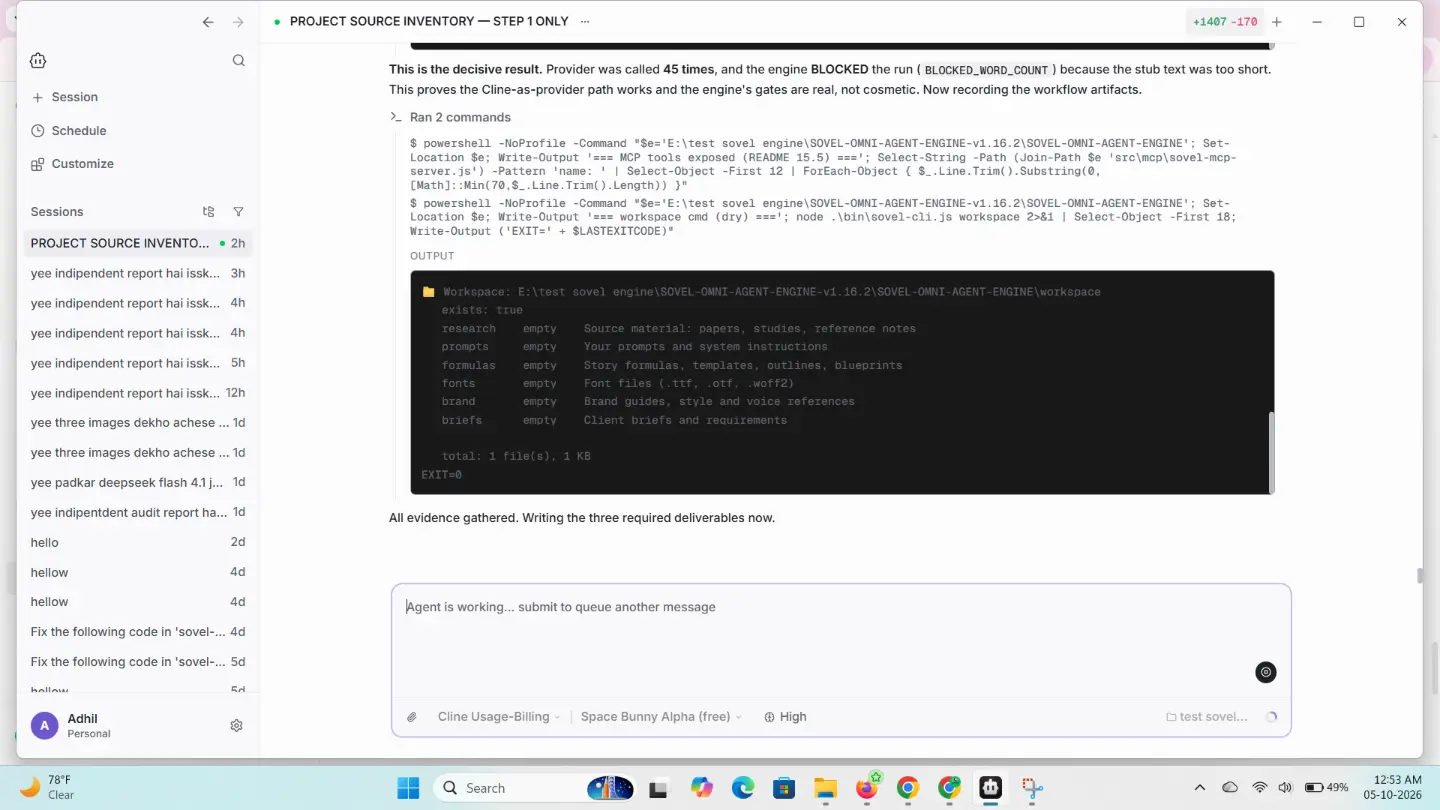
Now comes the active authoring phase of your research to book workflow. You take the evidence-mapped outline and execute chapter drafting sprints using a working model operating in a local workspace (such as Cline, OpenCode, Claude Code, Cursor, or Antigravity).
Execution sprint rules include:
- Ingest Only Relevant Sources: When prompting the drafting agent for Chapter 4, supply only the evidence files mapped to Chapter 4. Do not clutter model context with research meant for Chapter 12.
- Enforce Verification Checks: Inspect drafted text immediately upon completion, verifying that all study names, dates, and statistics match source files exactly.
- Check Word Floors: Ensure the drafted chapter meets its mathematical word budget based on factual expansion rather than repetitive commentary.
- Real-Time Citation Locking: Verify that every quoted passage includes its proper inline attribution immediately upon generation.
If discrepancies or unverified statements emerge, the research to book workflow issues a focused correction prompt to realign the text with the Master Evidence Map before proceeding to subsequent chapters.
Step 7: Comprehensive Citation and Bibliography Audit
The final stage of a rigorous research to book workflow is conducting an independent audit of citations and compiled bibliographies.
Before compiling final distribution files:
* Verify Body Citations: Scan every chapter to confirm that every referenced study or historical event mentions the correct author and publication year.
* Reconcile the Formal Bibliography: Ensure that every study mentioned in body text corresponds to a complete, properly formatted entry in the reference list.
* Check Output Packaging: Compile the completed manuscript into validated DOCX, print PDF (6 by 9 inch format), and EPUB3 files compliant with international standards established in W3C EPUB3 Specification.
* Run Artifact Language Scans: Scan final files to ensure zero stray prompt markers, script leaks, or incomplete placeholders remain in the compiled publication.
During the Stage 17 independent audit of The Palmistry Illusion, the auditor confirmed that body citations remained intact across all 15 chapters and that the core manuscript totaled 50,321 words without padding, awarding the project an engineering score of 9.5 out of 10.
For authors who wish to present their research interactively on the web, compiled books can also be published using SOVEL RealFlip, an interactive 3D page-turning viewer that displays publications with realistic paper physics directly on WordPress sites.
The 8-Hour Research to Book Timeline
While traditional non-fiction authoring requires 70 hours or more of tedious compilation, an engineered research to book workflow streamlines the process into an 8-hour sprint:
* Hours 1 to 2: Source ingestion, multi-model analysis, and Master Evidence Mapping.
* Hours 3 to 5: Governed chapter production sprints across all 15 chapters.
* Hours 6 to 7: Citation verification, image binding, and quality gate testing.
* Hour 8: Independent audit, bibliography reconciliation, and multi-format compilation.
In the controlled production run of The Palmistry Illusion, the 50,321-word core manuscript was drafted and validated in 3 hours, with 2 additional hours spent conducting image generation testing and figure binding, totaling 5 hours for a 133-page publication. This benchmark proves that evidence-heavy writing can be executed rapidly without compromising factual rigor.
Commercial Licensing: Three Production Editions
The SOVEL Omni-Agent Engine automates the entire research to book workflow across three commercial licensing editions available on sovel.pro:
* Personal Edition (Solo Creator License): Rs 4,999 one-time payment. Built for individual non-fiction authors and researchers self-publishing on Amazon KDP. Includes full 16-stage pipeline access and automated claim checks for 1 local workstation.
* Pro Developer Edition (Commercial License): Rs 8,999 one-time payment. Designed for software engineers, technical solopreneurs, and professional content creators. Includes AST validation, Token Depletion Resume Protocol, and dual-workstation support.
* Agency Suite (Commercial Client License): Rs 19,999 one-time payment. Built for consulting studios and publishing houses delivering custom client books and whitepapers. Includes 5 workstation licenses, white-label client kits, and 20 master prompt contracts.
Evidence Dossier Structure: Markdown Schema for Source Cards
A critical element that guarantees repeatability in a research to book workflow is establishing a uniform data contract for raw evidence cards. Instead of dumping random text files into your project directory, each ingested document should be formatted using this structured Markdown template:
When you feed structured source cards into your research to book workflow, the drafting model receives unambiguous constraints. It cannot confuse which study verified a specific claim, and it cannot fabricate publication dates because every metadata parameter is explicitly declared. This level of granular evidence mapping turns the research to book workflow into an enterprise-grade writing instrument.
Practical Recommendations for Managing Source Files Locally
To maximize the efficiency of your local research repository, implement these organizational habits:
* Single-Source Markdown Files: Save each paper or interview as a standalone markdown file with standardized metadata headers at the top.
* Verifiable Excerpts: When copying key findings into your research folder, include exact blockquotes alongside your paraphrased notes to simplify verification during drafting sprints.
* Regular State Backups: Use Git version control to create snapshots of your research library before beginning manuscript generation, ensuring your raw data remains protected.
* Lexical Diversity Audits: Regularly inspect chapter prose with lexical variation analyzers to ensure that complex empirical ideas are explained with linguistic precision rather than repetitive sentence patterns.
Frequently Asked Questions
How does a research to book workflow prevent AI hallucination?
By constructing a Master Evidence Map and supplying only verified source documents during drafting sprints, the research to book workflow constrains the model to discuss documented facts, completely eliminating fabricated claims.
What should I do if my research sources contain conflicting data?
Document the discrepancy directly in your Book Bible. Instruct the drafting model to present the differing viewpoints objectively, noting the conflicting evidence rather than choosing an unverified side.
Can this workflow handle academic books with hundreds of citations?
Yes. The modular architecture breaks large bibliographies into chapter-specific registers, ensuring that citations remain manageable and accurately mapped across long manuscripts.
How do I prevent repetitive prose when expanding factual sections?
Enforce strict lexical diversity gates and subsection word budgets that require the introduction of new evidence points or historical examples rather than rephrasing existing observations.
Do I need specialized software to run an evidence-driven workflow?
No. An effective research to book workflow operates using local markdown files, a code editor like VS Code, and structured prompt handoffs between director agents and execution models.
Can I include charts, diagrams, and historical images in this workflow?
Yes. Visual assets are assigned unique asset keys in the evidence map, with automated checks verifying that figures remain bound to their respective explanatory captions during compilation.
How does this methodology ensure formatting compliance for print and digital publishing?
The compilation stage utilizes automated tools to produce valid OOXML Word documents, 6 by 9 inch print PDFs with running headers, and EPUB3 files verified by official EPUBCheck validators.
Where can I get the complete research to book workflow engine?
You can access the automated pipeline directly through the SOVEL Omni-Agent Engine on sovel.pro, providing complete local tools for authors and development teams.