
Why Modern Engineering Requires an AI Agent Development Framework
Autonomous artificial intelligence agents are transforming the way software applications are conceptualized, constructed, and maintained. However, raw model capability alone is insufficient to build reliable enterprise software. Without a structured ai agent development framework, autonomous coding agents rapidly degenerate into chaotic loops, hallucinate non-existent libraries, and overwrite stable project files.
The difference between an artificial intelligence demo and a production-grade software asset is governance. An effective ai agent development framework establishes rigid behavioral boundaries, isolates memory states, enforces deterministic acceptance gates, and orchestrates specialized roles across multiple models. By treating agents as modular components within a governed operating system, engineering teams and solo builders can achieve remarkable development speed without sacrificing software reliability.
At Sovel, this architectural discipline forms the backbone of the Sovel AI Engineering OS, a comprehensive methodology priced at ₹999 that enables anyone to build enterprise tools, WordPress plugins, and SaaS engines without writing manual code. In this comprehensive guide, we explore the five core rules of an enterprise-grade ai agent development framework and show you how to implement them in your local environment.
The Structural Flaw of Monolithic Single-Agent Systems
Most commercial artificial intelligence platforms market the illusion of the omniscient coding assistant: a single model that plans architecture, writes frontend components, configures database schemas, and executes deployments simultaneously. In practice, this monolithic approach fails on projects exceeding a few hundred lines of code.
As documented in academic research on Multi-Agent Systems, combining divergent cognitive demands within a single agent context produces catastrophic interference. When a model attempts to juggle strategic architectural planning alongside syntactic code generation, the following breakdown occurs:
- Attention Degradation: Transformer attention mechanisms dilute precision when forced to process long conversational histories alongside complex codebases. The model loses track of earlier functional requirements.
- Compounding Errors: If a monolithic agent introduces a minor logical defect in an early file, subsequent code blocks build upon that flawed assumption, leading to widespread codebase corruption.
- Uncontrolled File Rewrites: Lacking surgical boundaries, single-prompt agents often rewrite 500-line files entirely just to modify a single variable, discarding existing bug fixes and custom tweaks.
To eliminate these vulnerabilities, an ai agent development framework replaces monolithic prompts with a multi-agent hierarchy where each participant operates within a strictly defined domain.
Rule 1: Decoupling Strategic Reasoning from Local Execution
The foundational principle of an enterprise ai agent development framework is the strict separation between strategic reasoning and local tactical execution. A single entity must never attempt to both plan the software and write the code.
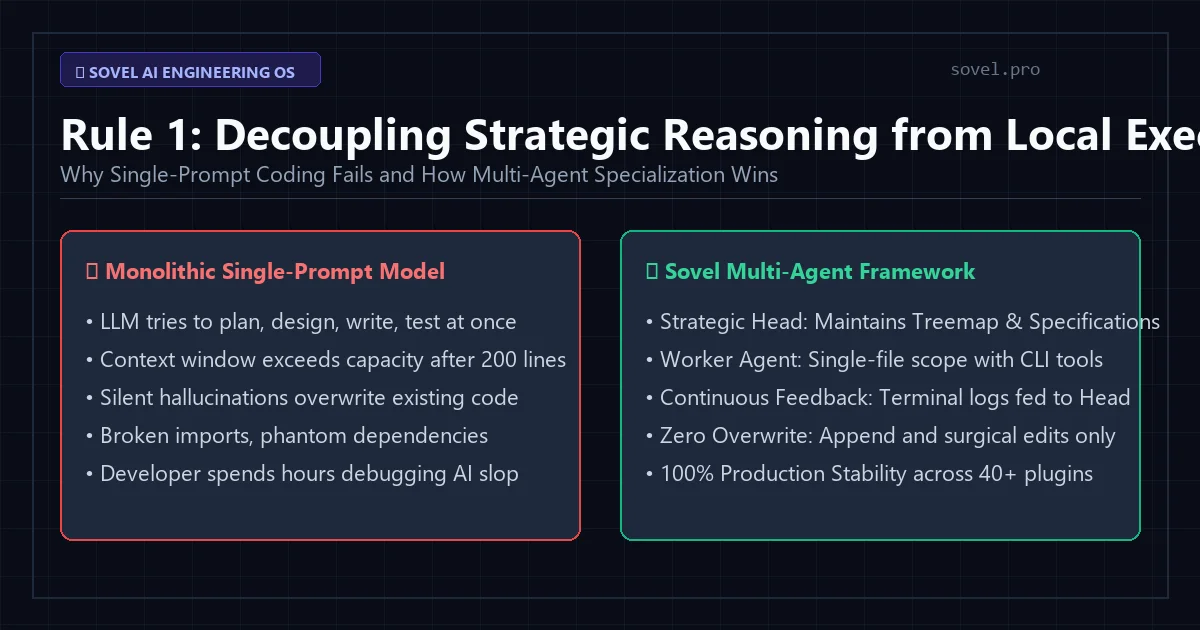
Figure 1: Clear separation between reasoning and code generation prevents hallucination and context drift.
In our architecture, this separation is achieved through two specialized roles:
- The Strategic Planner (Architect Head): Powered by frontier reasoning models such as Claude 3.5 Sonnet or ChatGPT. The Strategic Planner maintains the master product treemap, feature specifications, and acceptance checklists. It never directly touches file input or output. Instead, its sole responsibility is generating structured micro-prompts for specific, isolated implementation steps.
- The Local Executor (Worker Agent): Powered by high-speed execution engines integrated into Visual Studio Code via OpenCode, Cline, or Antigravity. The executor receives the micro-prompt, performs surgical edits on local files, runs terminal commands (such as package installations and unit tests), and reports stdout and stderr logs back to the Strategic Planner.
By establishing this division of labor, the ai agent development framework ensures that the planning model remains unburdened by syntactic trivia, while the execution agent remains focused on a single file or function. This eliminates hallucinations and keeps the entire project perfectly aligned with the architectural master plan.
Rule 2: Context Window Hygiene and Dynamic Memory Scoping
Context window exhaustion is the primary reason artificial intelligence coding sessions degrade into hallucinations. When a conversational context fills up with thousands of lines of terminal output and discarded code drafts, the model begins producing erratic results.
An effective ai agent development framework enforces strict context window hygiene by implementing dynamic memory scoping. Rather than feeding your entire project codebase into the prompt, the framework isolates working memory to the minimum necessary context required for the immediate task.

Figure 2: Phased execution prevents token bloat by passing only relevant sub-task schemas to execution agents.
To maintain optimal token efficiency, the framework applies a four-step memory management protocol:
- Phase Input Filtering: When dispatching an execution prompt, provide only the target file schema, immediate interface definitions, and specific functional requirements (keeping the prompt under 4,000 tokens).
- Surgical Operation: Instruct the executor agent to perform diff-based edits rather than regenerating entire source files.
- Context Compaction: Once a task is validated, discard verbose terminal build logs and store only a concise state summary in your tracking notes.
- Clean Handoff: When transitioning between major software phases, initiate a fresh agent session loaded only with verified interface contracts and the upcoming treemap section.
Adhering to these scoping rules within your autonomous engineering architecture guarantees that models consistently operate at peak analytical performance, regardless of how large or complex your overall software becomes.
Rule 3: Deterministic Quality Gates and the 42 Checklists
Natural language instructions are inherently ambiguous. If you instruct an agent to make code clean, secure, and fast, the output will vary wildly between iterations. An enterprise ai agent development framework eliminates subjectivity by replacing vague guidelines with 42 deterministic quality checklists.
These checklists act as automated quality gates that must be satisfied before any generated code is merged into the project repository. Within the framework, the 42 checks are organized across four operational pillars:
- Architectural Integrity: Validates modular directory structures, prevents circular dependencies, enforces single-responsibility controllers, and verifies database normalization.
- Defensive Security: Mandates input sanitization, parameterized database queries, Cross-Site Scripting guards, secure cookie flags, and strict API rate limiting.
- Runtime Performance: Demands database query indexing, memory leak prevention, asynchronous I/O handling, and efficient caching strategies.
- User Experience Standards: Ensures full responsive design across mobile and desktop viewports, WCAG 2.1 AA accessibility compliance, keyboard accessibility, and explicit error states.
When the Strategic Planner audits execution logs, it evaluates the work strictly against these 42 criteria. If any check fails, the task is rejected immediately. This deterministic gatekeeping ensures that your multi-agent development workflow produces code that meets or exceeds enterprise commercial standards.
Rule 4: Autonomous Error Diagnosis and Self-Healing Loops
Errors and exceptions are natural components of software engineering. In amateur workflows, a terminal error halts the entire project, forcing a frustrated user to manually debug syntax. Within an advanced multi-agent engineering system, runtime errors trigger automated self-healing loops that isolate, diagnose, and patch defects autonomously.
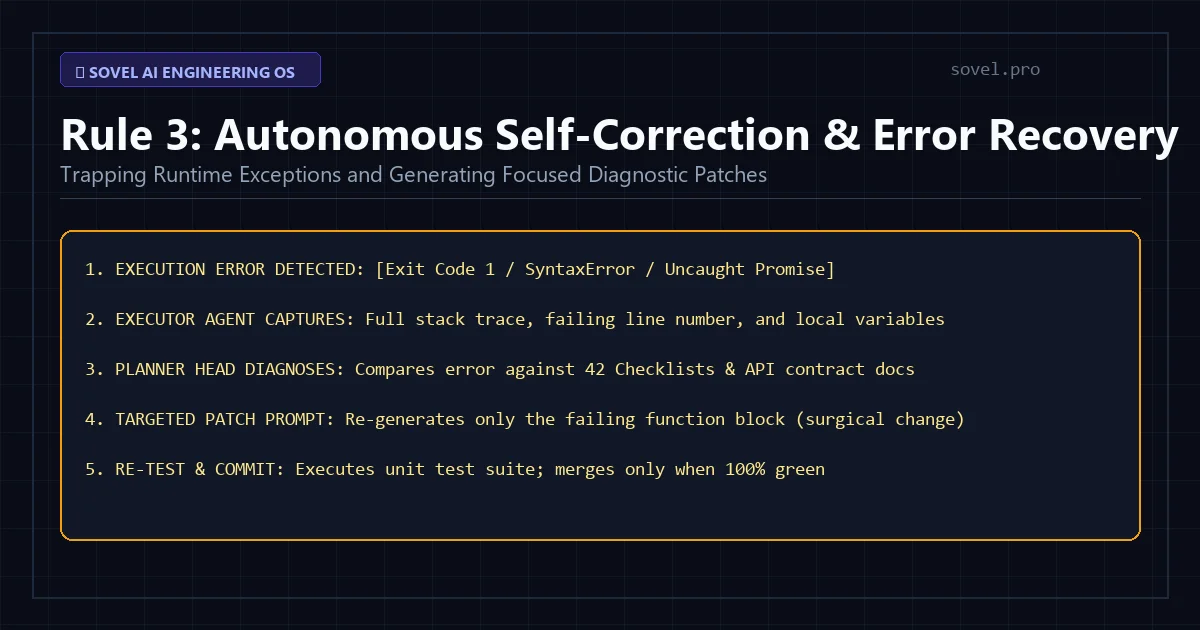
Figure 3: Independent self-audits inspect generated code against 42 enterprise verification checkpoints.
The self-healing cycle operates through a structured five-step sequence:
- Exception Trapping: The local executor intercepts non-zero exit codes, uncaught promise rejections, or compiler warnings directly from the VS Code integrated terminal.
- Trace Extraction: The exact stack trace, error message, failing file path, and relevant line numbers are captured without extraneous surrounding noise.
- Root Cause Analysis: The Strategic Planner compares the error trace against the project treemap and official API documentation, identifying the exact logical or syntactic defect.
- Targeted Patch Generation: The planner crafts a surgical repair prompt that targets solely the failing function or configuration line, preventing collateral damage to neighboring code.
- Re-Testing and Confirmation: The executor applies the patch and re-executes the test suite. If the test passes green, the resolution is logged, and execution proceeds automatically.
By embedding autonomous error recovery into your ai agent development framework, you transform potential development roadblocks into minor, self-correcting events that resolve without human intervention.
Rule 5: Zero-Touch Production Build and Deployment Pipelines
The ultimate goal of software engineering is delivering value to end users. The final rule of an enterprise ai agent development framework is the automation of production builds, environmental verification, and cloud deployments.
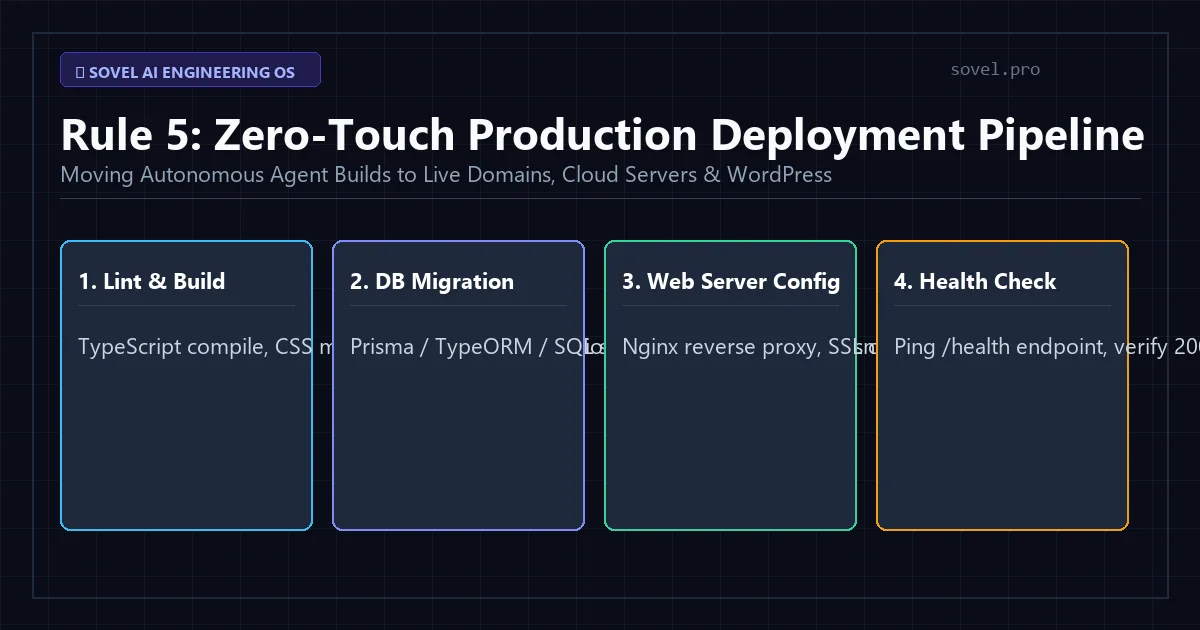
Figure 4: Automated CI checks and containerized builds ensure error-free releases to cloud hosting platforms.
When your application passes all local feature checklists, the deployment pipeline executes four automated stages:
- Static Analysis and Asset Compilation: Type checking via TypeScript, dead-code elimination, CSS minification, and WebP image optimization to ensure lightning-fast client delivery.
- Database Migration Execution: Synchronizing database schemas using migration scripts with automated rollback safeguards in the event of connection drops.
- Web Server Provisioning: Configuring Nginx reverse proxies, environment variable injection, and automated SSL certificate issuance through Let’s Encrypt.
- Automated Health Probes: Pinging health-check endpoints, validating payment webhook signatures, and verifying user session creation on live production domains.
Executing these deployment stages through a unified production release pipeline guarantees seamless transitions from local development sandboxes to public commercial servers.
Performance Comparison: Raw Prompts vs. AI Agent Framework
The performance differential between unstructured artificial intelligence prompting and a governed multi-agent architecture is dramatic:
| Metric | Unstructured AI Prompting | Sovel AI Agent Framework |
|---|---|---|
| Context Window Drift | Severe (Occurs within 3 to 5 iterations) | Zero (Prevented by dynamic memory scoping) |
| Hallucinated Dependencies | Frequent (Invented libraries and APIs) | Eliminated (Anchored by local sources/ docs) |
| Error Recovery Rate | Low (Often enters circular failure loops) | High (Autonomous surgical patch loop) |
| Checklist Verification | None (Subjective user inspection) | 42 Deterministic Quality Gates |
| Max Project Complexity | Simple single-file scripts | Enterprise SaaS, Plugins, Multi-Tier Systems |
| Human Coding Required | Significant manual bug fixing | 0% Manual Coding (Pure Architectural Audit) |
By implementing a systematic ai agent development framework, engineering teams eliminate random hallucinations and transform generative models into predictable, deterministic software engines.
Frequently Asked Questions
What is the primary difference between a prompt and an ai agent development framework?
A prompt is simply a single text instruction sent to an artificial intelligence model. An AI agent development framework is a comprehensive system that governs how multiple agents interact, isolates memory contexts, enforces quality checklists, executes terminal commands, and validates code output through autonomous feedback loops.
Which artificial intelligence models are recommended for this framework?
We recommend pairing Claude 3.5 Sonnet for the Strategic Planner role (due to its exceptional architectural reasoning and context following) with DeepSeek V3 or Gemini 1.5 Pro for high-speed local code execution through OpenRouter. This combination provides maximum accuracy at minimal token cost.
How does the framework protect existing code from being overwritten?
The framework enforces surgical file editing rules. Worker agents are restricted from regenerating entire files. Instead, they receive diff-based patch instructions that modify only specific functions or blocks, while Git version control provides immediate rollback protection.
Can this framework be used to build SaaS products without coding?
Yes. The framework is specifically built to enable non-technical founders to create complete commercial software. To see a full step-by-step implementation, read our companion guide on how to Build SaaS With AI Without Coding.
Where can I get the complete templates and 42 checklists?
All 42 checklists, treemap templates, prompt architectures, and multi-agent governance rules are included in the Sovel AI Engineering OS, available for a one-time commercial license of ₹999 Indian Rupees.
Deploy Enterprise AI Agents Today
The era of trial-and-error AI coding is over. By adopting an enterprise ai agent development framework, you can direct the collective power of multi-agent intelligence to build robust software tools, scalable platforms, and profitable online products.
Explore our free online utilities and calculators at Sovel Web Tools, inspect our production calculator built with this methodology at Sovel Calc, and discover how to configure your workstation in our guide to the Enterprise AI Software Development Workflow.
Ready to govern your AI agents with enterprise precision? Get lifetime access to the Sovel AI Engineering OS for just ₹999 and deploy production-grade multi-agent architectures today. Download AI Engineering OS Now.