
Answer engine optimization is the practice of structuring your website so that AI answer systems such as ChatGPT, Gemini, and Perplexity quote your content instead of inventing their own reply. It is a separate discipline from classic SEO, because the two systems value different things. Search engines reward links and authority. Answer engines reward clear, self-contained, well-sourced blocks of text they can lift and cite directly. This guide gives you a practical 5-step method to make your business website quotable, with the evidence-led approach built into the flow.
The short answer: answer engine optimization comes down to answering one question per section, writing the answer first, and backing it with a verifiable source. Do those three things well and AI systems start reaching for your pages. Everything else in this guide is detail on how to do those three things reliably and at scale.
One more point needs to be clear before we start. Answer engine optimization is not a replacement for SEO. It is a layer on top of it. A page still needs to be found and indexed before any AI system can consider it, and that is the job of classic SEO. Answer engine optimization takes an already-visible page and decides whether it actually gets quoted when an AI answers a question. Both layers matter, and you build them in that order. Think of it as a two-stage funnel. SEO gets your page into the conversation, and answer engine optimization gets your page chosen from that conversation. A site that invests in only one stage leaves value on the table.
Why business websites lose AI citations
Most business websites were written for a reader who starts at the top and reads to the bottom. The homepage introduces the company, the about page tells the story, and the service pages describe what you sell. That structure works for a person. It works poorly for an answer engine, which does not want a narrative. It wants a direct answer it can pull out of a page and reuse.
When a business fails to get cited, it is rarely because the information is wrong. It is because the information is buried. The answer exists somewhere on the site, but it sits inside a long paragraph, or it is split across multiple pages, or it assumes context a chatbot does not have. The answer engine cannot isolate a clean chunk, so it moves on to a competitor who presented the answer more clearly. That is the most common way businesses lose the citation, and it is exactly what answer engine optimization fixes.
The fix is not to write less. It is to write in a way that lets a machine find the answer quickly. That is what answer engine optimization is for. When you adopt it, you make every page you publish more likely to be quoted, which builds visibility far beyond what a rankings list can give you.
Figure 1: Answer engine optimization turns a business page into a quotable source.
Step 1: Find the questions customers actually ask AI
You cannot answer questions you have not identified. Start by collecting the real questions people type into AI systems about your industry. Do not guess. Use the questions that come up in autocomplete, in related searches, and in support emails you already receive.
The SOVEL GAP BRAIN engine does this collection for you. Give it your business topic and it pulls live search signals, then returns the questions and keywords around your industry with a score for each. That scored list is your raw material. From it you choose the questions that matter most to your customers and that you can answer with real proof. This research step is the foundation of any answer-engine effort.
Keep the questions specific and conversational. “How much does it cost to replace a roof” is a real question a business in that trade would want to answer. “What is the average lifespan of a metal roof” is another. Each becomes the seed of one self-contained answer block, which is the basic unit of answer engine optimization. The more the question matches how a person actually speaks into a chatbot, the better it will work.
Step 2: Answer one question per section
Once you have your questions, assign each one to its own section on your site. A section can be a heading on a service page, a dedicated FAQ item, or a short standalone page. The rule is simple: one section, one question, one complete answer.
This is where most business sites go wrong. They answer three questions in a single paragraph or they spread one answer across four pages. An answer engine wants a section that is self-contained, so that landing on it from a search result or an AI citation gives a complete, useful chunk without needing anything else. When every section is complete on its own, your answer engine optimization works the way it should.
Structure each section the same way. Open with the direct answer in the first two or three lines. Then add the detail. This answer-first form is the single most reliable signal that a section is quotable, and it is the backbone of answer engine optimization in practice. A concrete example helps. If you sell solar panels, one section might ask “what does a solar panel installation cost in 2026” and give a straight figure with the source. Another section asks “how long do solar panels last” and answers with the manufacturer data. Each section stands alone, and each becomes quotable.
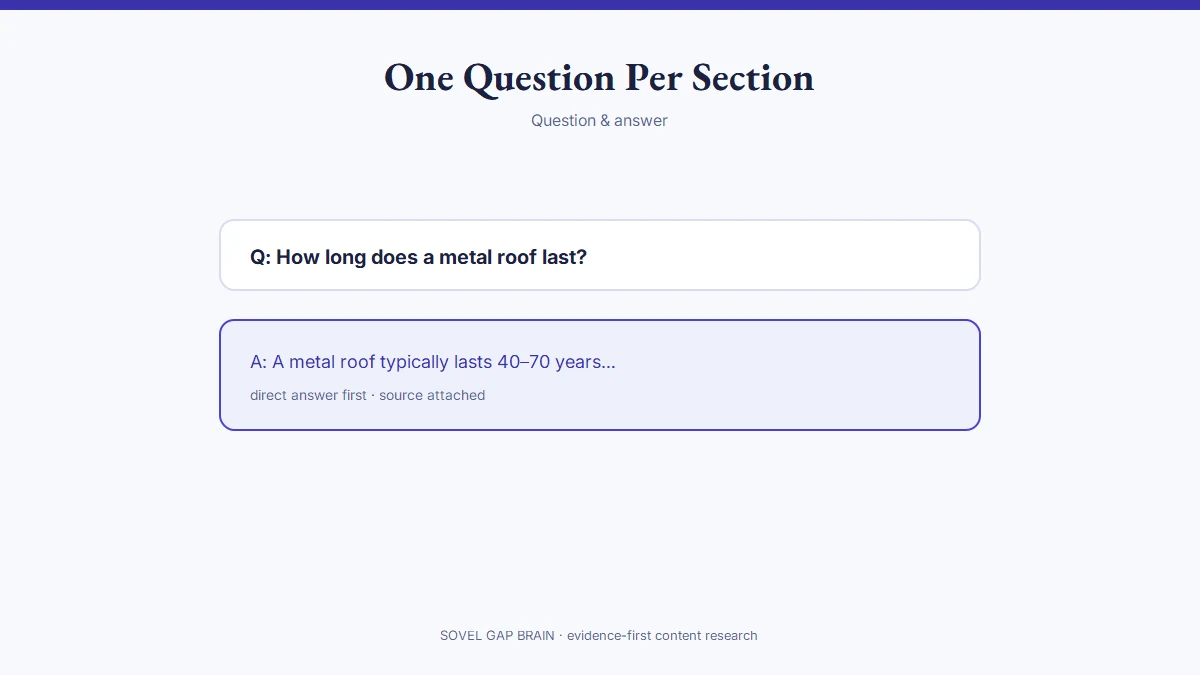
Figure 2: Assign one question per section and answer it completely.
Step 3: Write the answer in a scannable format
Plain paragraphs work, but structured formats work better for answer engines. When the content is genuinely list-like or comparative, use a list or a table. A machine can parse a bulleted list or a comparison table cleanly and lift it into an answer without reordering your sentences.
Use plain language and short sentences. Define any technical term the first time you use it, so that both a reader and an AI system get a clean definition sitting next to the term. Avoid dense jargon and avoid hedging that waters down your answer. Clear, direct sentences are what a machine can lift with confidence, which is the entire point of answer-engine writing.
Keep paragraphs to two to four lines. Vary the rhythm so the page reads naturally, but keep each paragraph tight. A page built from clean, short, independent sections is far easier for an answer engine to chunk than a page of long, dense paragraphs. This structural clarity is central to answer engine optimization. It also improves the experience for human readers, who skim first lines and lists just like a machine does. When you write for the machine, you often end up writing better for the person too.
Step 4: Back every answer with a verifiable source
Authority is a currency here. An AI system is more likely to quote content that cites a primary source than content that presents an unverifiable opinion. So for each answer on your site, tie it to evidence you can point to.
The evidence-led approach makes this practical. The GAP BRAIN engine keeps an evidence ledger for every claim it processes, recording the source, the URL, and the status of that source. You can reuse that ledger as the basis for your citations. When you write an answer, link to the primary evidence behind it. Primary meaning the original study, official data, or firsthand reporting, not another blog summarizing it.
You do not need a citation in every sentence. One or two strong primary sources per major claim is enough. The goal is to make your page the version of the answer that a machine can safely quote because it can see where the facts came from. That trust is what makes this discipline pay off, and it is why the evidence layer matters so much. Keep your citations close to the claim they support rather than gathered at the bottom of the page. A direct link beside the fact is the clearest signal to both a reader and an AI system that the claim can be checked.

Figure 3: Each answer carries a visible source, which strengthens its chance of being quoted.
Step 5: Track which answers get cited
This is not a one-time project. It is a loop. After you publish your structured answers, you need to find out which ones AI systems actually use and which ones they still miss.
You can check this by asking the AI systems yourself. Ask ChatGPT, Gemini, and Perplexity a question from your business and see whether your site shows up and how it is described. Do this monthly. If a question you covered is still answered from a competitor, the issue is either that your answer is not clean enough or that the system has not discovered it. Each finding becomes a precise next task in your answer engine optimization loop.
The GAP BRAIN engine supports this loop by being re-run on the same topic. A fresh run shows which gaps closed and which ones remain, and it flags the questions your site still does not answer. That keeps your answer engine optimization effort pointed at the highest-value work instead of drifting. Keep a simple log of which questions you have answered, which ones got cited, and which ones competitors took. Over a few months, that log reveals exactly where your answer engine optimization effort is working and where it needs attention.

Figure 4: Track which answers get cited so you know where to focus next.
How answer engine optimization connects to the GAP BRAIN engine
The SOVEL GAP BRAIN engine is built around exactly this discipline. It finds the questions people ask, checks whether your coverage answers them, scores the gaps by opportunity, and records the evidence for each one. When you fill a gap, you write the self-contained, answer-first block this guide describes, with the source trail already collected for you.
Because the engine runs locally and uses free public sources, it fits a business that wants control over its content without an ongoing subscription. You can see the product page for the tier details. For the underlying research logic, the site’s evidence-led content research article explains how the evidence map is built.
Answer engine optimization versus classic SEO
Answer engine optimization and classic SEO are not rivals. They are two layers. A page still needs to be crawlable and indexed before an answer engine can even consider it, which is the job of SEO. Answer engine optimization then decides whether the indexed page actually gets quoted.
The two layers reward different details. Classic SEO cares about title tags, meta descriptions, internal linking, and authority. Answer engine optimization cares about section structure, answer-first writing, scannable formats, and primary-source citations. A page that does both well is the strongest position a business can be in, and it is the realistic goal for any site that wants to survive both rankings and AI answers.
Common mistakes that block citations
A few recurring mistakes keep business sites from getting cited. The first is writing for the homepage rather than for the question, meaning the answer is buried in a brand story. The second is splitting one answer across several pages so no single section is complete. The third is using long, dense paragraphs that an answer engine cannot cleanly chunk. The fourth is stating claims without any source, so the machine has no reason to trust the page.
Each of these is fixable with the five steps above. Ask the real questions, answer one per section, write in a scannable format, cite your sources, and track the results. The loop is simple, and it compounds because every clean answer you publish becomes another page an AI system can reach for. That compounding is the real value of answer engine optimization.
Building this into a content routine
The fastest way to make the five steps stick is to turn them into a routine. When you plan any new page, run the steps in order: collect the questions, assign one per section, write answer-first, add sources, and track the outcome. After a few pages, the loop becomes instinct, and every new page is quotable from the start.
You can also apply the steps to your existing best pages. Take a page that already gets traffic and refit its sections to answer-first form with sources attached. That often produces a quick, visible improvement, and it gives you a template for the rest of the site.
Finally, share the routine with whoever writes for your business. When everyone follows the same pattern, your whole site becomes more quotable, not just one or two pages. That sitewide consistency is what turns a single effort into a lasting advantage for your brand. For the gap-finding half of the same routine, see generative engine optimization content gaps, and for spoken queries see voice search content optimization. The FAQPage schema is the markup side of the same work, and it is what lets an answer engine read a question-and-answer block cleanly.
FAQ
What is answer engine optimization in simple terms?
It is the practice of making your website pages easy for AI answer systems to quote. You do this by answering one question per section, writing the answer first, and supporting it with a source.
Why does my business rank on Google but never get cited by AI?
Ranking and being cited are different. Search engines rank pages on authority and links. AI systems cite pages that present clean, self-contained answers backed by evidence. You can rank well and still lose the citation if your answer is buried.
Do I need special software for answer engine optimization?
No. You need a way to find the questions people ask and a way to structure your answers. The GAP BRAIN engine automates the question-and-gap finding, but the writing and structuring you do by hand.
How long does it take to see results?
Most sites see the first citations within weeks of publishing structured, answer-first sections. The bigger payoff builds over months as more of your pages become quotable and as AI systems discover them.
Should I rewrite my whole website?
Start with the pages that already get the most traffic and the questions that matter most to your customers. Rewrite those sections to be answer-first and self-contained, then expand to the rest of the site.
Does answer engine optimization help with Google too?
Yes. The same structural clarity that helps AI citations also helps Google understand your page better. Answer-first sections and clean structure are good for classic SEO as well.
How do I check if I am getting cited?
Ask ChatGPT, Gemini, or Perplexity a question from your business and see whether your site appears. Do this monthly and note which answers are still missing.
Can a local business benefit from answer engine optimization?
Yes. Local queries get asked constantly in AI chat. A local business that answers questions like “how much does a new driveway cost” with a clean, sourced answer can win citations that send customers its way.