
—
Learning how to build a prospect list is not the same as learning how to download one. Anyone can gather a thousand company names in an afternoon. That is not how to build a prospect list, it is how to build a pile. The harder skill is building a list where every row can survive a phone call.
A list that falls apart on contact costs more than it saves, and that is the whole reason how to build a prospect list deserves a method rather than a shortcut. You dial a number that belongs to nobody, quote a service the company does not offer, or reach a business that closed two years ago. Each of those moments spends the one resource you cannot refill, which is the prospect’s patience.
This guide covers six steps, in order, from deciding who belongs on the list to verifying every row before you use it. Read it as how to build a prospect list that survives contact rather than one that only looks complete. It assumes no paid tools and no technical background. Every step can be done with a browser and a spreadsheet.
Step 1: Define the buyer before you collect anything
Most weak lists fail here, not later. This is the first place people go wrong when learning how to build a prospect list. The collection gets blamed, but the real fault is that nobody wrote down who the list was for.
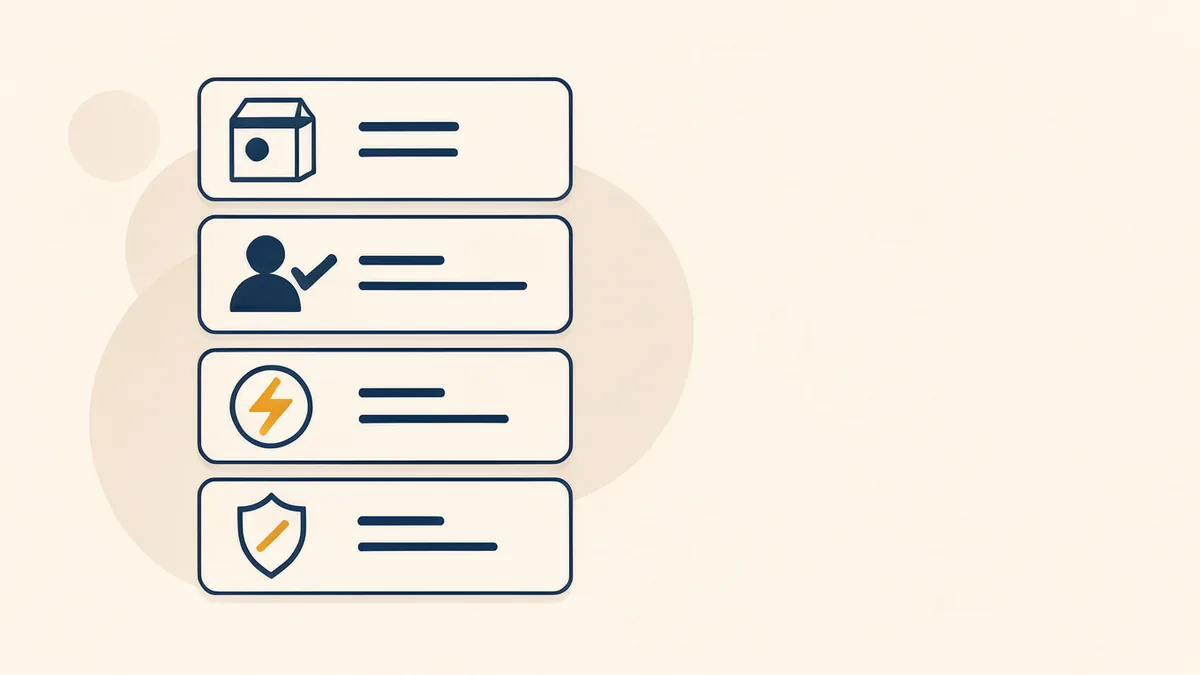
Before opening a single search, answer four questions on paper. This is the step that decides whether how to build a prospect list works for you or merely keeps you busy.
What does this business sell? Not the industry. The specific thing that changes hands for money.
Who inside the business decides? For a small shop it is usually the owner. For a larger firm it may be a purchasing manager or an operations lead.
What event makes them need you now? A new location, a season change, a licence renewal, a competitor closing.
What would disqualify them instantly? Too small, wrong region, already contracted to someone else, sells a category you do not serve.
Those four answers become your filter, and they are the foundation of how to build a prospect list that stays focused. Without them, every row you collect is a guess, and guesses do not survive the first call.
Now you can start, and every row you add will have a reason. Every step below gets easier once you stop learning how to build a prospect list as a bulk exercise and start treating it as a targeting exercise.
Step 2: Use sources that publish verifiable contact details
The fastest way to break a list, and the most common shortcut when people learn how to build a prospect list, is to scrape contact details from a place that never intended them to be public. The second fastest is to buy a list from a broker.
Work from sources where the contact detail is published deliberately, by the business itself. This is the single biggest difference in how to build a prospect list responsibly.
Registry and licensing data. Trade licences, registrations, and professional directories usually carry a business name, address, and often a phone number. Because the business filed the record itself, the details are usually current.
Association member directories. Trade bodies list members with contact details, and membership implies the business is active and willing to be contacted.
Business websites. If a company publishes a phone number and an email on its own site, it wants enquiries. That is consent in practice.
Local business listings. Maps and directory listings often carry hours, phone, and a website. Treat them as a starting point to confirm on the company’s own site rather than as final truth.
What to avoid when you learn how to build a prospect list: scraped social profiles repackaged as a list, purchased databases, and anything whose origin you cannot explain. Data protection rules vary by country, and the W3C guidance on the web of trusted data is a reasonable starting point for understanding what responsible handling looks like. A prospect who asks where you found them deserves an honest answer, and “I do not know” ends the conversation.
Recording the source of every row
This small habit decides whether your list is trustworthy, and it is the part of how to build a prospect list that most guides skip.
Add a column called Source. Write where the row came from, such as the trade registry entry, or the company contact page with the date you checked it.
Two things follow. When a detail looks wrong, you know where to re-check. And when a prospect asks how you found them, you can answer in one sentence, which is a far stronger opening than an apology.
The same discipline applies when you record a phone number. Note whether it is a main line, a mobile, or a direct line to a named person. Those three behave very differently when you call.

Step 3: Capture the fields that a conversation needs
A row with a name and a phone number is a lead. Understanding that difference is the core of how to build a prospect list. A row with context is a prospect.
Capture enough that you can open a conversation without sounding like a cold call, because that is what separates how to build a prospect list from how to collect names.
| Field | Why it earns its place |
|---|---|
| Business name | The obvious one, spelled exactly as the business spells it |
| Decision maker name | Turns a stranger into a person you can ask for |
| Role | Tells you whether they can say yes or only say no |
| Phone | Note the type: main line, mobile, or direct |
| Some buyers reply only to email, and some never read it | |
| Website | The fastest way to understand what they sell |
| Location | Region matters for visits and for delivery |
| Source and date checked | Protects the list’s credibility |
| Signal | The specific thing that made you include them |
That last field, the signal, is the one most lists omit and the one that wins calls. A signal is a specific, recent, observable fact. They opened a second branch. They started listing a product line you supply. Their current supplier’s page has not been updated in a year.
When you open a call with a signal, you are not interrupting. You are reacting to something real about their business.
Learning how to build a prospect list properly means learning that this column carries the weight. Names and numbers are commodity. Signals are the reason a prospect takes the call.
Step 4: Verify before you write the row
This is the step most people skip, and it is the reason so many lists are unusable. Skip it and how to build a prospect list becomes a typing exercise.
For every shortlisted business, confirm four things at the source. Verification is where how to build a prospect list separates itself from how to download a spreadsheet.
The business is still trading. Look for recent activity: a current website, recent posts, up-to-date hours. A closed business with an active listing will waste a call and a visit.
The contact detail works. Messages on email, or a quick look at whether the number is in service, removes a whole class of wasted attempts.
The business actually matches your filter. Re-read the four answers from step one against this row. A list that drifts from its own filter is worse than a small list that holds it.
The person still holds the role. People move. A name from eight months ago may now be the wrong person, which is more damaging than having no name at all, because you will confidently address someone who has no idea what you mean.

The two minute rule
Give each row a hard limit. Without one, how to build a prospect list turns into an endless research project. Two minutes of verification, then decide: keep, hold, or drop.
Without a limit, verification becomes its own project and the list never gets used. With a limit, you end up with a smaller list that works. A hundred verified rows will beat a thousand unverified ones every time, because the second hundred of the unverified thousand costs a week of failed calls.

Step 5: Qualify with questions, not with assumptions
A verified row is not yet a qualified prospect, and this is the step where how to build a prospect list turns into how to sell. Nothing earlier in the list can substitute for it. Qualification happens through contact, and it should happen with short, direct questions.
Six questions do most of the work, and they are the bridge between a good list and a real conversation.
Who currently supplies this? It tells you the competitive situation and whether there is room at all.
When did you last review that arrangement? A long gap suggests openness. A recent review suggests a decision was just made.
What would make a change worth the disruption? This surfaces the real criteria, which are rarely price alone.
Who else is involved in that decision? You learn immediately whether you are talking to the right person.
What is the timeline? Honest answers tell you whether to follow up this week or next quarter.
What would you need to see from us? This is the question that closes loops, because it tells you exactly what to send next.

Notice that none of these ask whether they want to buy. That question is premature and makes people defensive. These ask about the current situation, which people answer willingly.
If you want to go deeper on the qualification stage, the guide on how to qualify a prospect covers the reasoning behind each question.
Step 6: Keep the list alive, or watch it decay
A prospect list is not a document. Anyone who treats how to build a prospect list as a one time task ends up with a file nobody uses. It is a live view of a market, and markets move.
Three habits keep it usable, and they matter more than how you gathered the rows in the first place.
Review cadence. Re-check a slice of the list every month, not the whole thing at once. A list without a rhythm is a list that quietly stops being true. A rolling review keeps every row fresh within a quarter without becoming a project.
Status discipline. Every row needs a status: new, contacted, replied, qualified, closed, or dead. Without status, you will call the same person twice and feel foolish.
Remove honestly. When a row is dead, delete it or mark it dead. A list padded with dead rows feels productive and wastes real hours.
There is a fourth habit worth adding. Record what you learned, not just whether they said yes. The reason a prospect declined is more valuable than the decline itself, because ten declines for the same reason tell you what to change.
Building a list for a specific market
The six steps hold for any market, and the details shift. Three examples show how how to build a prospect list looks in practice.
A local trade serving shops
A frames supplier selling to optical retailers starts with licensing records and trade directories for the district. The decision maker is almost always the owner. The signal might be a new shop front, or a product line the shop lists but the current supplier does not stock. Verification means confirming the shop is open and the number reaches the owner rather than a shared line.
A service business selling to companies
A bookkeeping practice starts with registration records filtered by company size and industry. The decision maker is a finance lead or a founder. The signal might be a recent funding announcement or a job posting for a finance role, both of which indicate growth that a small practice can absorb. Verification means confirming the company still operates and that the named person still holds the role.
A freelance designer selling to agencies
A designer starts with agency directories and portfolio sites. The decision maker is a creative director or a founder. The signal might be a recent award, a new client win, or a portfolio that shows work in a style the designer can support. Verification means confirming the agency is active and that the contact route is a real person.
In each case the same rule applies, and it is the rule that makes how to build a prospect list worth the effort. The signal column does the selling, and learning how to build a prospect list without a signal column produces rows that cannot open a conversation.
The mistakes that quietly ruin a list
Five mistakes appear often enough to name, and each one is a lesson about how to build a prospect list the hard way.
Collecting contacts you cannot explain. If you cannot say where a detail came from, you cannot use it honestly, and one awkward question ends the call.
Treating volume as progress. A thousand rows feels like momentum. It is usually a thousand unverified guesses, and the work of qualifying them never happens.
Skipping the disqualifier. A list with no disqualifying criteria grows without limit and slowly fills with businesses that will never buy.
Letting the list go stale. Contact details age faster than most people expect, especially mobile numbers and job titles.
Forgetting what happened. Without status and notes, you will repeat calls and lose the reasons behind every decline.
Each of those is cheap to prevent and expensive to repair. That is the whole argument for the six steps above, in order, before any collecting begins.

One piece of outside evidence, because a guide that only quotes itself is not worth much. This review is on the public Trustpilot page for sovel.pro.
> “156 Optical Leads in 3 Minutes and 45 Seconds: 63 of My First 72 Contacts Placed Orders”
>
> Krazy Khan, optical frames supplier, Annamayya district, Andhra Pradesh. Rated 5 out of 5 stars.
The numbers are specific. The run produced 156 business leads with public phone, email and social contacts. From the first batch of 56 shops, 49 placed confirmed orders. Across 72 businesses contacted, 63 placed orders, three at Rs 50,000 to Rs 1,20,000 each.
The reviewer is careful about one thing, and it should be repeated here. The software did not generate sales. He made the calls, visited the shops, presented the frames, and followed up. The tool did the discovery and research quickly. He did the selling.
That is the honest version of what any tool can do. It is also the version worth trusting.
“156 Optical Leads in 3 Minutes and 45 Seconds: 63 of My First 72 Contacts Placed Orders”
Krazy Khan, optical supplier, Annamayya district, Andhra Pradesh
Doing this faster without breaking it
The six steps are sound, and doing them by hand for a large market is slow. That gap is where most people give up on how to build a prospect list manually and start looking for help. That is where a discovery tool earns its place, provided it supports the steps rather than replacing them.
SOVEL Client Radar is built around this sequence. It gathers publicly listed business contact details, keeps the source for each record, and produces the output in several formats so the list can move into a spreadsheet or a document. The verification step stays with a person, because only a person can judge whether a business truly fits.
SOVEL Client Radar product page
The distinction matters. A tool that gathers and organises speeds up steps two and three. It cannot do step one, defining the buyer, because that is a business decision. It cannot do step five, qualification, because that is a conversation. It can make step four, verification, much faster by keeping sources attached to every row.
If you have been finding prospects through social platforms alone, the guide on find clients without LinkedIn covers why that channel narrows your view of the market.
Common questions
How many prospects should be on a list?
Start smaller than feels comfortable. Around a hundred verified rows is enough to test your filter and your opening message. Expand only after the first hundred proves that the filter is right, because a filter error repeated a thousand times is a thousand wasted calls.
Should I buy a prospect list?
Usually no. Purchased lists are often stale and cannot tell you where each detail came from, which means you cannot answer honestly when a prospect asks. Building from published sources takes longer and produces a list that survives scrutiny.
What is the most important column, and how do I know the list is good?
The signal column. A row with a name and number is easy to find. A row that includes a specific, recent, observable fact about the business is what makes a conversation possible. To test the whole list, ask one question: can you open a call with a specific observation about that business, and can you say where you found their contact details? If both answers are yes for most rows, the list is good.
Do I need paid tools to build a list?
No. Registry data, association directories, and business websites cover most needs with a browser and a spreadsheet. Paid tools help with volume and speed, and they are not a substitute for defining the buyer and verifying rows.
The short version
Learning how to build a prospect list is mostly about restraint, and restraint is the part no tool can supply. Define the buyer before collecting. Use sources that publish contact details on purpose. Capture the fields a conversation needs. Verify every row within a time limit. Qualify with questions rather than assumptions. Keep the list alive with a review rhythm.
Do those six things and a hundred rows will outperform a thousand gathered in a hurry. That is the practical answer to how to build a prospect list that actually gets used. Skip them and you will spend your week dialling numbers that belong to nobody.
If you want to see the full workflow in a tool built for it, the free tools and product pages are the next stop.