
—
Content gap verification is the step between finding an apparent gap and committing a week of writing to it, and it is the cheapest hour in any content plan. It answers one question: does this gap exist in the world, or only in a spreadsheet.
Most content plans skip this step, and content gap verification is the discipline that separates a plan from a wish list. A keyword looks promising, a competitor page looks thin, and writing begins. Google Search Central documents how content is discovered, and that documentation is a better guide to what makes a page findable than any competition score. Six weeks later the article ranks for nothing, because the gap was real in the tool and absent in the market.
This guide covers five checks that separate a genuine gap from a plausible one, which is the whole purpose of content gap verification. Each check is cheap, each produces evidence you can point at, and together they take about an hour.
Why gaps look real when they are not
Four failures produce false gaps often enough to name, and each one is caught by content gap verification.
The tool shows low competition. A low competition score often means low search volume, not an opportunity. A keyword nobody searches has no competition because there is nothing to compete over.
A competitor page is thin. Thin does not mean the topic is underserved. It can mean the topic does not convert, so nobody invested. Copying that decision without knowing why is a way to repeat it.
The query is real but the intent is different. Someone searches a phrase meaning one thing and your article answers another. The traffic arrives, does not find what it wanted, and leaves. That pattern looks like a ranking problem and is actually a mismatch.
The gap is already covered under a different phrase. Your own site may answer the question under a heading you did not think to check. Writing a second article splits your own authority.
Content gap verification exists to catch all four before they cost you a week of writing.
Check 1: Confirm the phrase is what people actually type
This is the fastest check in content gap verification and the one that eliminates most false gaps.
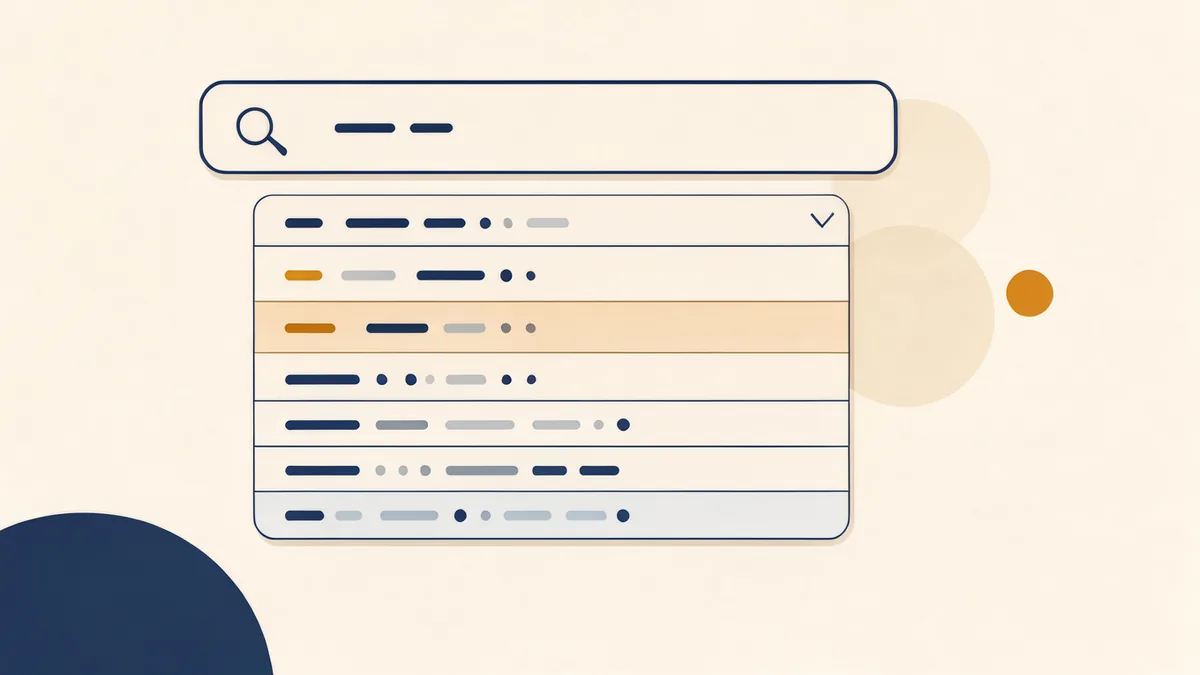
Type the phrase into a search box and read the autocomplete suggestions. If the suggestions are real and related, the phrase is in use. If the box returns nothing, or returns something unrelated, the phrase probably is not how anyone searches.
This single test rules out a category of error that costs weeks. A phrase invented inside a company, such as an internal product abbreviation, often returns nothing at all, or returns results from a completely different industry.
Test the phrase in more than one place. Google’s guidance on how search works explains why a phrase can appear in one engine and not another, which is worth knowing before you conclude a gap is empty. Search suggestions differ between engines and between regions, and a phrase used in one market may be absent in another. Two sources agreeing is much stronger evidence than one.
Record what you saw. A short note such as “returns five related suggestions on two engines, dated today” is evidence. “Seems popular” is not.
Check 2: Read the pages that already rank
If pages already rank for the phrase, the gap is not empty, and this is the second lesson content gap verification teaches. It is a question of whether those pages answer the query well.
Read the top three results properly. Not the titles. The content.
For each one, note whether it answers the question the searcher is asking. A page can rank and still fail, and that failure is where a real gap lives. If all three are shallow, the gap is real. If one is thorough, the gap is a quality gap, which is a much harder fight.
Three patterns appear, and reading them properly is the core skill in content gap verification.
All results are thin. A genuine gap. A thorough page would win.
One result is excellent and others are poor. Not a gap. That one page likely satisfies the query, and search engines are confident about it.
Results are thorough but answer a different question. A genuine gap, provided the query’s real intent is what you think it is. Check one helps confirm this.

Write one line per result. That gives you a defensible view of the landscape rather than an impression.
Check 3: Check your own site before anyone else’s
The most expensive gap is the one your site already covers, which is why content gap verification starts with your own site.
Search your own site for the phrase and for two or three close variants. Use the site search, and check the sitemap if you have one. What you are looking for is an existing page that already answers the question, possibly under a different title.
Three outcomes are possible, and they decide how content gap verification ends.
Nothing exists. The gap is open on your side too.
Something exists and covers it well. The gap is closed. The right action is to improve that page, not to write a new one.
Something exists and covers it partly. This is the common case, and the right action is usually to expand the existing page rather than compete with it.
That third case matters more than it sounds. Two pages on the same question split your internal links, split your authority, and create a maintenance burden. Search engines struggle to decide which to show, and often show neither.
The pattern has a name: cannibalisation, where two of your own pages compete for one query. Content gap verification is the step that prevents it.
If you want a wider view of how this analysis works, the guide on content gap analysis covers the surrounding method.

Check 4: Look for the question behind the phrase
A keyword is a string. A question is a need, and content gap verification works better when you test the need. Content gap verification works better when you test the need.
Take the phrase and write the question a person would ask if they typed it. Then search that question.
Three things become visible, and each one sharpens the result of content gap verification.
People ask a related but different question. The real demand is adjacent to your phrase. That is useful information, and it may be a better target.
People ask the same question with different words. Your phrase may be a minority phrasing. Using the more common words may be correct even if your phrase tested fine in check one.
The question is already answered comprehensively by a well known source. That tells you the query is informational and probably satisfied. A new article competes with a strong incumbent for little reward.
Searching the question rather than the phrase is the step most plans skip, and it is where the useful surprises appear.
Check 5: Define what would make you right
The last check is the one that makes the other four honest, and it is the part of content gap verification that most people skip.
Before writing, write down what evidence would prove the gap is real, and what evidence would prove it is not. Two lines each.
What would confirm it. Three ranking pages that are all thin, no page on your own site, and suggestions confirming the phrase is used.
What would kill it. Your own site already covers it well, or one ranking page is thorough, or the phrase returns no suggestions.
Writing both in advance prevents the most human failure in research, which is deciding the answer first and collecting evidence afterwards. When the evidence contradicts the plan, you notice.
Content gap verification is not about finding reasons to write. It is about finding reasons not to write, before you spend the week.

Building a verification record
Every check above produces evidence, and content gap verification is only as strong as the record it leaves. Recording it turns an opinion into a document, which matters when a plan is reviewed by someone else.
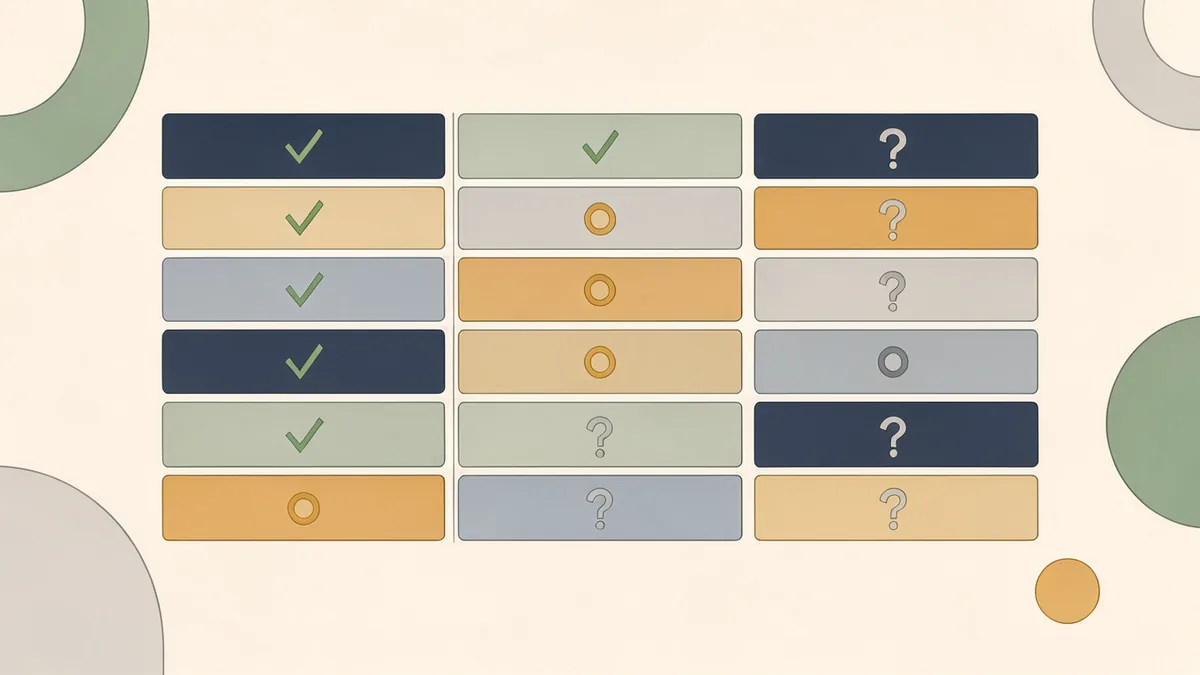
A useful record has five rows, one per check, with three columns. That record is the output content gap verification exists to produce.
What was checked. The phrase, the page, the site search, the question, the pre-committed criteria.
What was found. Short, factual, dated.
What it means. Confirms, contradicts, or inconclusive.
That last column is the important one. Inconclusive is a legitimate finding, and recording it honestly prevents a weak gap from being written up as a strong one.
The record also makes the next step obvious. A gap with five confirms is ready. A gap with two contradicts needs a new phrase. A gap with three inconclusive findings needs a different approach rather than more confidence.
When the checks disagree
The five checks rarely all agree on the first pass, and knowing how to read disagreement is where content gap verification gets practical. What to do when they conflict is the practical part.
If the phrase is used but one ranking page is thorough, treat it as a quality gap rather than an open gap. That means the article must be measurably better, which is a higher bar and a slower win.
If your own site partly covers it and the ranking pages are thin, expand the existing page. You already have authority on the topic and a new page divides it.
If the phrase returns no suggestions but the question behind it is popular, target the question instead. The phrase was your assumption. The question is the evidence.
If everything is inconclusive, the honest answer is that more research will not settle it. Either pick a different phrase or accept the uncertainty and write a small test article rather than a full length one.
That last option is underused. A short, honest piece tests demand at a fraction of the cost, and it tells you more than another week of analysis.
A worked example
Take a concrete case to show how the checks combine in real content gap verification.
A team wants to write about a specific workflow phrase. They believe it is underserved.
Check one. The phrase returns four related suggestions on two engines. The phrase is used, and the variants suggest real intent.
Check two. The top three results are all short, none covers the workflow end to end, and one is mostly a product page. The landscape is genuinely weak.
Check three. A site search returns one existing article on an adjacent topic. It covers the first half of the workflow and stops. This is a partial overlap, which means expanding rather than writing new.
Check four. The question behind the phrase turns out to be slightly different from the assumption. People want the handoff step, not the whole workflow. That is a narrower and more useful target.
Check five. Pre-committed criteria said the gap is real if three ranking pages are thin and no own page covers it fully. Two of three hold, and the third is partial.
The decision. Expand the existing article to cover the handoff step properly, and target the narrower question rather than the broad phrase. That is a smaller piece of work than the original plan and a stronger one.
That is what content gap verification produces in practice. Not a longer list of articles, but a better decision about one.
The cost of skipping it
The argument for content gap verification is economic, so it is worth stating plainly.
A full article takes a week of writing plus image work and review. If the gap was false, that week produces a page that ranks for nothing, competes with your own content, or attracts the wrong visitors.
Content gap verification takes an hour. The ratio is roughly forty to one. Even if the checks only catch one false gap in five, they pay for themselves many times over.
The deeper cost is credibility. A content plan full of articles that never ranked teaches everyone involved to distrust content plans. That is a much harder problem to fix than a single bad keyword.
One piece of outside evidence, because a guide that only quotes itself is not worth much. This review is on the public Trustpilot page for sovel.pro.
> “156 Optical Leads in 3 Minutes and 45 Seconds: 63 of My First 72 Contacts Placed Orders”
>
> Krazy Khan, optical frames supplier, Annamayya district, Andhra Pradesh. Rated 5 out of 5 stars.
The numbers are specific. The run produced 156 business leads with public phone, email and social contacts. From the first batch of 56 shops, 49 placed confirmed orders. Across 72 businesses contacted, 63 placed orders, three at Rs 50,000 to Rs 1,20,000 each.
The reviewer is careful about one thing, and it should be repeated here. The software did not generate sales. He made the calls, visited the shops, presented the frames, and followed up. The tool did the discovery and research quickly. He did the selling.
That is the honest version of what any tool can do. It is also the version worth trusting.
“156 Optical Leads in 3 Minutes and 45 Seconds: 63 of My First 72 Contacts Placed Orders”
Krazy Khan, optical supplier, Annamayya district, Andhra Pradesh
Doing this at scale without losing the rigour
Running content gap verification on one phrase takes an hour. Running them on two hundred phrases takes a month, which is why most teams stop and revert to reading a tool’s score.
The way to scale is to automate the collection and keep the judgement human.
Collection can be automated. Search suggestions, ranking pages, and your own sitemap can all be gathered without a person clicking. That is what a research tool is for.
Judgement cannot. Deciding whether a thin page is thin because nobody cared or because the topic does not convert requires reading it. Deciding whether your own page covers something well requires understanding your own content.
SOVEL Gap Brain is built on this split. It gathers the evidence and lays it out, and it keeps the decision with a person.
The distinction matters because a tool that pretends to decide will produce confident wrong answers at scale. A tool that organises evidence and leaves the judgement alone produces something you can defend.
If you are working through several topics, the free tools include a starting point for gap analysis.
free tools for simple document tasks
Where to go next
If the gap turns out to be closed on your side, the next job is improving the existing page rather than writing a new one. The wider method is covered in the content gap analysis guide.
If you are building lists of businesses rather than topics, the guide on how to build a prospect list applies the same evidence discipline to a different material.
how to build a prospect list guide
Common questions
What is content gap verification?
It is the step where you confirm that an apparent content gap exists in the real market before committing to write. It tests demand, existing coverage, and your own site rather than relying on a tool’s competition score.
How long does verification take?
About an hour per phrase for all five checks. That hour is far cheaper than a week of writing that ranks for nothing, and it can be done in three short sittings.
Is low competition always a good sign?
No. Low competition usually means low demand. The best gaps combine real search language with genuinely weak existing results, and both halves need separate proof.
What if my own site already covers the topic?
Then the gap is closed on your side, and the right action is to expand that page rather than write a competing one. Two of your own pages on one query split your authority and confuse search engines.
Can a tool do this for me?
Collection can be automated and judgement cannot. A tool can gather suggestions, ranking pages, and your own content. Deciding whether a thin page is a real opening requires a person who can read it.
What is the most common reason a gap turns out fake?
The query is real but the intent is different. People search the phrase for one reason and the planned article answers another, so traffic arrives and leaves. Reading the ranking pages properly catches this.
The short version
Content gap verification is five checks and one habit. Confirm the phrase is used in real search boxes. Read the pages that already rank. Check your own site first. Test the question behind the phrase. And write down in advance what would prove you wrong.
The habit is the fifth check, and it is the one that keeps the first four honest. Research that cannot fail is not research.
Do this and your content plan will be smaller than the one you would have written, and it will work. That is the ordinary result of content gap verification done properly.