
—
An AI project handoff is the moment work moves from one person or session to another, and it is where most of the value in a project quietly escapes. It is where most of the value in a project quietly escapes.
The code still runs. The document still exists. But the reasoning behind both is gone, and the next person starts by reverse engineering decisions that once took five minutes to explain.
This problem got sharper with AI assistance, which is why ai project handoff now deserves its own attention because now the work moves between people and sessions constantly. An agent produces something, a person refines it, another session continues it, and each move is a chance to lose context.
This guide covers five mistakes that cause that loss, and a plain structure that keeps context alive across an ai project handoff.
Why handoffs fail more often now
Three things changed, and together they explain why ai project handoff became a discipline of its own.
Work moves faster. A task that once took a week of one person’s attention now passes through several hands in a day. Each pass is a handoff.
Context lives in the session. When an AI assistant did the work, much of the reasoning sits in a conversation that nobody saved. Close the session and the reasoning is gone.
Sessions are not shared. A colleague cannot read someone else’s conversation. They see the output and nothing else.
None of those are failures of the people involved, and none of them are solved by trying harder at ai project handoff without a structure. They are structural, and they need a structure in response.
Mistake 1: Handing over the output without the reasoning
The most common mistake in any ai project handoff is handing over a finished artifact and nothing else.
Here is the file. Here is the function. Here is the draft. All of it is true and none of it explains why.
The next person in an ai project handoff now has three choices. Accept it without understanding, which works until something needs changing. Reverse engineer it, which costs hours. Or rewrite it, which discards the original work.
None of those are good, and all three are avoidable with four sentences: what this does, why it was built this way, what was tried and rejected, and what is still unresolved.
Those four sentences take three minutes to write and save hours. That ratio is the argument for ai project handoff in one line. The ratio is the entire argument for taking an AI project handoff seriously.
The rejected options matter most. Anyone can see what exists. Nobody can guess what was tried and abandoned, which means the next person will often try it again.

Mistake 2: Assuming the session is the record
When an AI assistant helped produce the work, there is a temptation in every ai project handoff to treat the conversation as documentation. The reasoning is in there, after all.
It is not, for three reasons.
The conversation is not shared. A teammate cannot open it.
It is not durable. Sessions end, contexts reset, and history has limits.
It is not searched. Even if the conversation exists, nobody will find the relevant turn six weeks later.
In an ai project handoff the record must live somewhere durable and shared. That usually means a short written note in the project itself, not a separate tool.
A practical pattern: after any substantial AI assisted session, write four sentences into the project’s notes file. What changed. Why this approach. What was rejected. What is still open. That single habit removes most of the loss.
Mistake 3: Handing over everything at once
The opposite failure is an ai project handoff so complete it is unusable.
A hundred pages of documentation, every decision recorded, every file described. The recipient reads the first two pages, feels overwhelmed, and works from the code instead.
A good ai project handoff is layered rather than exhaustive, because a recipient who is overwhelmed will not read it.
Layer one, the summary. Under two hundred words. What the project does and what state it is in.
Layer two, the current task. What is being worked on now, and what the next step is.
Layer three, the decisions. Why the major choices were made, with the rejected alternatives.
Layer four, the detail. Full documentation, available if needed and never required to start.
In a usable ai project handoff the first three layers should be readable in ten minutes. That is what makes a handoff usable. The fourth layer exists for the person who needs it, and most people never will.

Mistake 4: No record of what was rejected
This mistake deserves its own section because it costs the most time in any ai project handoff.
Every project accumulates rejected approaches, and the ai project handoff is where they are usually lost. A framework that did not fit. An architecture that broke under load. A message that did not convert. A workflow that created more work than it removed.
Those rejections are knowledge, and they are almost never written down.
What follows is predictable. The next person hits the same problem, considers the same option, spends a day investigating, and reaches the same conclusion. That day is spent twice, once by each person, and nothing is learned.
A rejection log is cheap and it belongs in every ai project handoff. One line per rejected option.
What was tried. One sentence.
Why it did not work. One sentence.
What was chosen instead.
Three lines per entry, written when the decision is made. Six months later, that log prevents a repeat investigation and explains choices that otherwise look arbitrary.
Mistake 5: Treating the handoff as an event
The last mistake in ai project handoff is treating it as something that happens once, at the end.
Handoff happens continuously, which is why the best ai project handoff is a habit rather than a document. Someone steps in for a day. A session resumes after a gap. A colleague asks a question. Each of those is a handoff, and each is a chance to lose context.
A better model is a running log that anyone can append to. Three parts.
Decisions. What changed and why, one line each, dated.
Open questions. What is unresolved and who owns each one.
Rejected options. The log described above.
A running log turns the ai project handoff from an event into a habit. And because it is written continuously, it costs a minute each time instead of a day at the end.

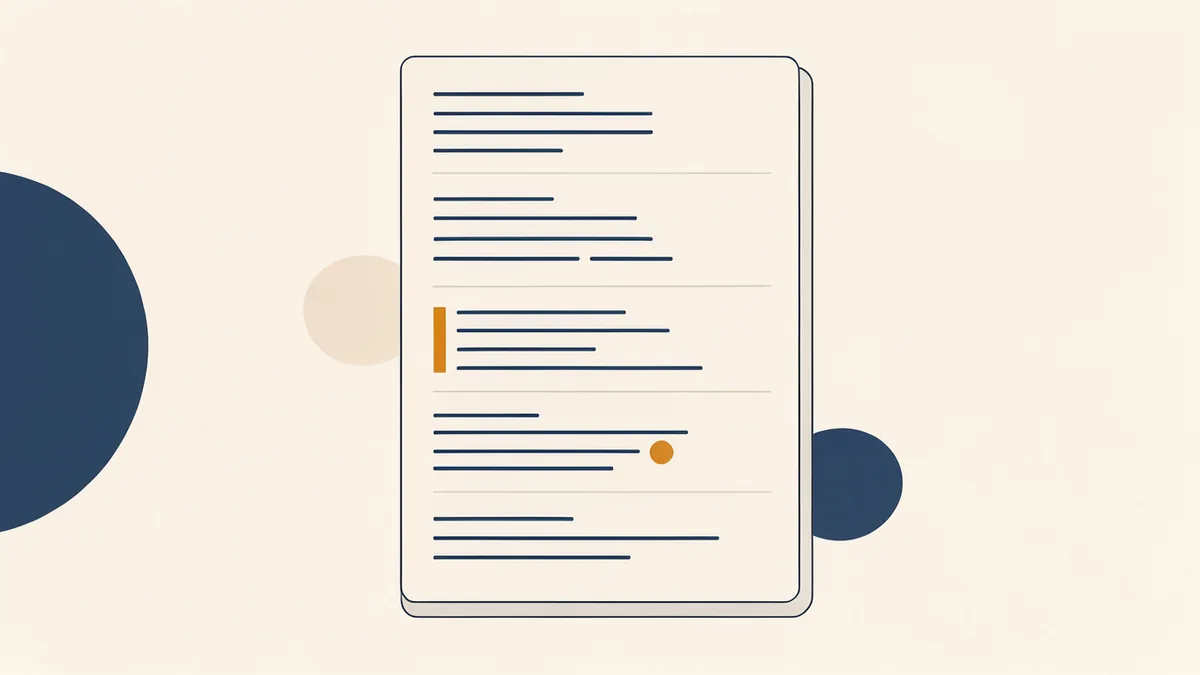
A handoff template that fits on one page
Five sections, each short, is enough for most projects, and together they are the whole of a workable ai project handoff. Nothing longer is required to begin.
What this is. One paragraph. What the project does and who it serves.
Current state. Three bullets. Working, in progress, blocked.
What was decided and why. Five to ten lines. The major choices with reasons.
What was rejected. The three line entries from mistake four.
What is open. Named questions with owners.
That page is the ai project handoff, and everything else supports it. Everything else supports it. If a project only has this page and the actual files, a competent person can continue within an hour.
Why this matters more as teams get smaller
There is a counterintuitive reason to care about AI project handoff now.
Small teams used to survive on shared memory. Three people in one room, all aware of why things were the way they were. Nobody wrote anything down because everybody already knew.
That model breaks in two ways. Teams distribute across time zones and sessions, so shared memory stops existing. And AI assistance multiplies the number of work sessions, so more context is created in conversations that nobody shares.
The result is a team that looks small and behaves like a large one, without the documentation habits large organisations developed out of necessity.
Four habits close that gap without adding process weight.
Write the four sentences at the end of every substantial session. Three minutes.
Keep a running log in the project, not in a separate tool. One line per decision, dated.
Record rejections as they happen, while the reason is fresh. A rejection log written later is usually a guess.
Name an owner for every open question. An unowned question is a question nobody will close.
None of those require a tool.None of those require a tool, and the same habits appear in the guide on AI coding workflow. Google Search Central‘s documentation is a reminder that anything published is read by systems as well as people.
All of them require agreement that the handoff matters as much as the work itself.
The cost, in plain numbers
It helps to see what context loss actually costs.
A day lost reconstructing why a decision was made. At a typical rate, that is a real amount of money, and it happens repeatedly on the same project.
A repeated investigation into an approach that was already rejected. Another day, and worse, because the person doing it believes they are breaking new ground.
A rewrite that discards working code because nobody could explain it. This is the most expensive of the three, and it is the one that most often follows a missing rejection log.
Multiply any of those by the number of handoffs in a month. Most teams hand work over several times a week, often without calling it a handoff.
The four sentence habit costs three minutes. Against a day of reconstruction, the ratio does not need an argument.

One piece of outside evidence, because a guide that only quotes itself is not worth much. This review is on the public Trustpilot page for sovel.pro.
> “156 Optical Leads in 3 Minutes and 45 Seconds: 63 of My First 72 Contacts Placed Orders”
>
> Krazy Khan, optical frames supplier, Annamayya district, Andhra Pradesh. Rated 5 out of 5 stars.
The numbers are specific. The run produced 156 business leads with public phone, email and social contacts. From the first batch of 56 shops, 49 placed confirmed orders. Across 72 businesses contacted, 63 placed orders, three at Rs 50,000 to Rs 1,20,000 each.
The reviewer is careful about one thing, and it should be repeated here. The software did not generate sales. He made the calls, visited the shops, presented the frames, and followed up. The tool did the discovery and research quickly. He did the selling.
That is the honest version of what any tool can do. It is also the version worth trusting.
“156 Optical Leads in 3 Minutes and 45 Seconds: 63 of My First 72 Contacts Placed Orders”
Krazy Khan, optical supplier, Annamayya district, Andhra Pradesh
Handoffs between people and agents
The same structure works for both directions, with one addition, and it makes ai project handoff reliable between people and agents alike.
Person to person. The one page template above is enough. Reasoning, decisions, rejected options, open questions.
Person to agent. Add a short statement of constraints. What the agent must not change. Which files are sensitive. What conventions matter. An agent without constraints will make reasonable decisions that are wrong for your project.
Agent to person. Ask the agent for the same four sentences before the session ends. What changed, why, what was rejected, what remains. This is the habit that converts a conversation into a record.
Agent to agent. The running log becomes essential, because a fresh context has no memory. A well written log lets a second agent continue work instead of repeating it.
If you are building workflows where agents pass work between each other, the guide on dual agent architecture for AI workflows covers the pattern in more depth.
How to tell a handoff worked
One test tells you whether an ai project handoff worked. Ask the recipient an hour after they start.
Can you explain what this project does, why the main decisions were made, and what the next step is, without asking anyone?
If the answer is yes, the handoff worked. If they need to ask, the handoff was incomplete, and the gap tells you which section to improve.
This test is worth running deliberately for the first few handoffs. It surfaces whether your template is actually usable or merely present.
Running a handoff in twenty minutes
If you need to hand over a project today and have not been keeping a log, this sequence reconstructs most of what matters in about twenty minutes.
Minute zero to five. Write the purpose paragraph. What this does and who it serves. If you cannot state it plainly, that is the most important thing to fix first.
Minute five to ten. Write the current state in three bullets. What works, what is in progress, what is blocked. Resist the urge to list every file. State is about readiness, not inventory.
Minute ten to fifteen. Write the decisions. Five to ten lines, major choices only, each with a reason. Skip anything reversible and obvious.
Minute fifteen to eighteen. Write the rejections. Whatever you remember of what was tried and abandoned. This is the section that saves the most time, and it is the one that has usually gone unrecorded.
Minute eighteen to twenty. Write the open questions with owners. If an owner is not obvious, name yourself as the person to ask.
That is a working ai project handoff in twenty minutes, and it is enough to unblock the next person today. It is not complete documentation and it does not need to be.
The person receiving it can start within the hour, and everything else can be added later as questions arise.
What good looks like after six months
A team that has adopted these habits looks different in ways that are easy to spot.
Questions start with context rather than with basics. Someone asking for help already knows why the architecture is what it is, because the log told them.
Rejected approaches stay rejected. Nobody spends a day re-investigating an option that was ruled out six months earlier, because the reason is written down.
New people become useful faster. The one page template is the first thing they read, and it answers most of what they would otherwise ask in the first week.
Rewrites become rarer. When the reasoning is visible, working code gets extended rather than replaced, because the next person understands why it was built that way.
None of those outcomes require discipline beyond writing four sentences at the end of a session. The barrier is not effort. It is agreement that the ai project handoff deserves three minutes while the work is still fresh.
Where to go next
If the handoff involves agents passing work to each other, the guide on dual agent architecture for AI workflows is the natural next read.
If the handoff is part of a larger automated process, the guide on human in the loop automation covers where a person should review before anything irreversible happens.
human in the loop automation guide
Common questions
What is an AI project handoff?
It is the transfer of a project from one person or session to another, including the reasoning behind the work. Without that reasoning, the recipient has artifacts and no understanding of why they exist.
Why do handoffs fail more often with AI assistance?
Because reasoning now lives in sessions that are not shared and not durable. A colleague sees the output but not the conversation that produced it, so the why disappears unless someone writes it down.
What is the minimum a handoff needs?
Four sentences: what this does, why it was built this way, what was tried and rejected, and what is still unresolved. That takes minutes and prevents hours of reconstruction.
Should I write documentation or a handoff note?
Both have a place. A handoff note is short, current, and aimed at someone continuing the work today. Documentation is thorough and aimed at reference. Write the note, and let documentation grow separately.
How do I stop the same mistakes being repeated?
Keep a rejection log. One line per option that was tried and abandoned, with the reason. Six months later that log prevents a second person from spending a day reaching the same conclusion.
Can this work for a solo project?
Yes, and it matters more there. A solo project resumed after a month is a handoff to a near stranger, which happens to be your past self. The running log is the note that person left you.
The short version
An AI project handoff fails when it carries artifacts and not reasoning. Five mistakes cause most of that loss: handing over output alone, assuming the session is the record, dumping everything at once, failing to record rejected options, and treating handoff as a single event.
The fix is a one page template and a running log. Four sentences at the top, decisions and rejections beneath, open questions named with owners. Written continuously, that costs a minute each time and saves days.