
Ask what a WordPress flipbook plugin costs and you will get a year-one price. That is the wrong number. The number that matters is what you pay over the period you will actually use the plugin, and for most site owners that is closer to three years than to one.
This article does the arithmetic in public. It compares published prices, works out the three-year total for each, and then states the counter-argument honestly, because a recurring licence does fund something a one-time licence does not.

Why Buyers Compare the Wrong Number
Year-one prices are easy to compare and easy to advertise. A plugin that costs $49 per year looks cheaper than one that costs $319 once. That comparison is true for exactly twelve months and misleading for every month after.
The problem is that a yearly licence is a rental, and a one-time licence is a purchase. Renting is cheaper if you stop after one year. Buying is cheaper if you keep using the product, which most site owners do, because a flipbook on a live site tends to stay on that site.
So the useful comparison is total cost over the period you expect to use the plugin. Three years is a reasonable planning horizon for a website, and it is long enough to show the difference clearly.
The Published Prices
These are the published prices in the flipbook category, taken from vendor pages and the WP Mayor flipbook plugin roundup, read on 2026-09-23. Prices change, so verify the source before you buy.
| Option | Published price | Billing |
|---|---|---|
| Yearly licence, single site | $49 | Per year |
| Yearly licence, single site | $55 | Per year |
| Yearly licence, single site | $59 | Per year |
| Yearly licence, unlimited sites | $159 | Per year |
| Lifetime licence, unlimited sites | $319 | One time |
Five published options. Three of them are single-site yearly licences clustered between $49 and $59. One is an unlimited-site yearly licence at $159. One is an unlimited-site lifetime licence at $319.
The clustering is informative. Three competitors priced within ten dollars of each other are not competing on price; they are competing on features. The unlimited yearly licence and the lifetime licence are different products for different buyers.
The Three-Year Arithmetic, Worked in Public
Here is the same table with the three-year total calculated.
| Option | Year 1 | Year 2 | Year 3 | Three-year total |
|---|---|---|---|---|
| $49 per year | $49 | $49 | $49 | $147 |
| $55 per year | $55 | $55 | $55 | $165 |
| $59 per year | $59 | $59 | $59 | $177 |
| $159 per year, unlimited | $159 | $159 | $159 | $477 |
| $319 lifetime, unlimited | $319 | $0 | $0 | $319 |
Read the last column. The cheapest single-site yearly licence costs $147 over three years, which is less than the $319 lifetime licence. So far the rental looks cheaper, and that is the honest state of the comparison at three years.
But the picture changes with the site count. The $147 figure covers one site. The $319 lifetime licence covers unlimited sites. If you run three sites, you either pay three yearly licences at $147 each, which is $441 over three years, or one lifetime licence at $319.
And the picture changes again with time. At year four, the $49 yearly licence has cost $196 while the lifetime licence is still $319. At year five, $245 against $319. At year six, $294. Around year seven, the single-site yearly licence overtakes the lifetime licence. After that, the rental keeps charging and the purchase does not.
So the honest arithmetic is: a single-site yearly licence is cheaper than a lifetime licence for the first six years. An unlimited-site yearly licence at $159 is more expensive than the lifetime licence by year three. The winner depends on your site count and your time horizon, and both are knowable before you buy.

The Counter-Argument, Stated Honestly
It would be easy to end this article with “buy the lifetime licence”. That would be a sales argument, not an honest one. The counter-argument is real, and it deserves to be stated.
A yearly licence funds ongoing development. A vendor who receives $49 every year has a reason and a budget to keep improving the product. A vendor who receives one payment has to fund future development from new sales alone. That difference shows up in the update history.
A one-time licence depends on the vendor continuing to ship. If a vendor sells a lifetime licence and then stops developing, the licence covers a frozen version. The buyer paid once and received no further updates, which is worse than a yearly licence from an active vendor.
A yearly licence can be cancelled. If the product stops being useful, you stop paying. A one-time licence is a commitment made before you know how the product will develop.
Those three points are true, and they are the reason the yearly model exists and works for many buyers. The decision is not “one-time good, yearly bad”. It is “which risk do you prefer to carry”.
The way to manage the one-time risk is to check the update history before buying, which is the next section.
What to Check Before Choosing Either Model
Four terms decide whether a licence is worth its price, and none of them appear in a year-one price comparison.
Update terms. Does the licence include updates for as long as you hold it, or only while you keep paying? A lifetime licence that includes updates is a different product from a lifetime licence that includes the current version only. Read the terms, not the headline.
Support window. How long is support included, and what does it cover? A support window that ends after 12 months is a hidden renewal, and it changes the three-year arithmetic.
Site limit. One site, a fixed number, or unlimited? A single-site licence at $49 becomes a $147 bill when you build three sites, and the unlimited licence starts to look different.
Refund window. Is there a refund window, and what does it require? A policy that requires the product to be unused is a narrow window, and it matters more on a one-time purchase than on a yearly one.
For a one-time licence specifically, add a fifth check: the update history. A product with a documented changelog that records real fixes over time is evidence that the vendor ships. RealFlip’s changelog includes a version 3.0.1 release that fixed 13 PHP defects, added nonce verification, and added multi-instance listener scoping. That is a record of work, and it is the evidence that answers the “will this vendor keep shipping” question.

How to Compute Your Own Number
The arithmetic is simple enough to do yourself in a minute, and doing it yourself is better than trusting any table.
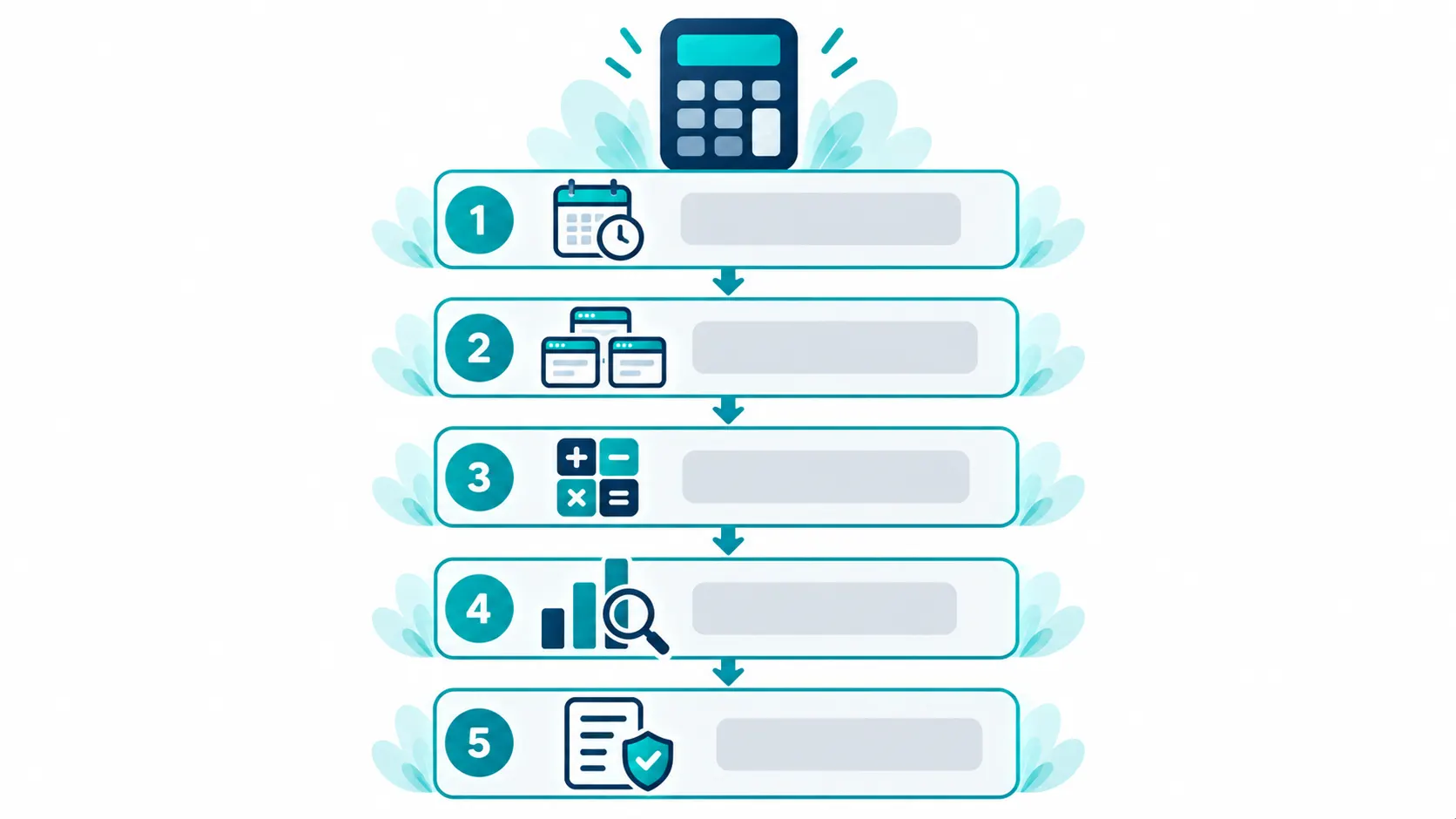
Step one: decide your time horizon. Three years is a reasonable default for a website; use five if the site is long-term.
Step two: count your sites. One, a fixed number, or unlimited.
Step three: multiply the yearly price by the horizon, and by the site count if the licence is per site.
Step four: compare that against the one-time price.
Step five: check the update terms and the support window, because those change the effective value of both options.
Five steps, and the answer is usually clear. The yearly option wins for a single site over a short horizon. The one-time option wins for multiple sites or a longer horizon. There is no universal answer, and any article that gives one is selling rather than informing.
Where RealFlip Sits
RealFlip is sold once, with updates included, and it does not require WooCommerce or a recurring subscription. The position it takes is simple: if you are going to keep a flipbook on a site for years, a purchase is cheaper than a rental, and the arithmetic above shows when that is true.
The honest framing is that this is a specific product for a specific buyer: someone who wants a self-hosted flipbook, does not want a yearly invoice, and values the reading and monetization features over a pure display animation. If that is you, the one-time model fits. If you would rather carry the vendor’s development risk for them, a yearly licence from an active vendor is a legitimate choice.
Both models are honest. The mistake is comparing them on the wrong number.

The costs that sit outside the licence fee
The licence price is the number on the sales page. The cost of running the plugin is the number you discover later. Four categories of cost sit outside the headline price, and ignoring them makes a cheap plugin expensive and an expensive one cheap.
The first is the renewal model. A one-time licence is paid once and used indefinitely. A yearly licence is paid every year for as long as you want updates. Over three years the difference is large: a yearly licence at a modest annual price can exceed a one-time licence at a higher upfront price. The arithmetic in the main article works this through, and the point is that the comparison must use the same time horizon on both sides.
The second is the dependency cost. A plugin that loads its libraries from a third-party server adds a dependency you do not control. If that server slows down, blocks your region, or shuts down, your flipbook stops working and you cannot fix it yourself. A plugin that bundles its libraries locally removes that cost, because the files ship with the plugin and nothing external has to stay online. This cost is invisible until the day the dependency fails, and then it is urgent.
The third is the maintenance cost. Every plugin on a live site needs occasional attention after a WordPress or browser update. A plugin with an active changelog reduces that cost, because the developer addresses compatibility before you notice a problem. A plugin that has not been updated in a year raises it, because you may have to find a replacement or patch around a break yourself. Time spent maintaining a plugin is a real cost even when no money changes hands.
The fourth is the opportunity cost of the wrong feature set. If a plugin lacks the reading aids your documents need, readers leave, and the cost shows up as lost engagement rather than a line item. A cheaper plugin that loses readers can cost more than a more expensive one that keeps them. This is why the feature set matters to the total cost, not just to the feature list.
Adding these four to the licence fee gives the honest cost of a plugin. A one-time licence with locally bundled libraries, an active changelog, and the reading features your documents need will usually come out cheaper over three years than a cheaper licence with a yearly renewal, a CDN dependency, and a stalled changelog. The headline number is the start of the comparison, not the end of it.
Frequently Asked Questions
How much should a WordPress flipbook plugin cost?
Published prices in this category run from $49 per year for a single site to $319 once for an unlimited-site lifetime licence. A fair price depends on your site count and time horizon, not on the year-one figure alone.
Is lifetime better than yearly?
It depends on your horizon and your site count. A single-site yearly licence is cheaper than a lifetime licence for roughly the first six years. An unlimited-site yearly licence is more expensive than a lifetime licence by year three. Neither model is universally better.
What does unlimited sites mean?
It means the licence covers as many sites as you build, rather than one. This matters when you run multiple sites, because three single-site yearly licences cost three times as much as one.
Do I get updates forever?
Only if the licence terms say so. A lifetime licence that includes updates is a different product from a lifetime licence that includes the current version only. Read the update terms before assuming, and check the changelog to see whether the vendor is still shipping.
What happens if I stop paying a yearly licence?
The plugin keeps working in the version you have, but you stop receiving updates and, in most cases, support. If a security issue is found in that version, you are on your own until you renew. That is the risk a yearly licence carries when you cancel.
Is there a refund window?
Refund policies vary, and many require that the product has not been accessed or downloaded. Check the vendor’s refund policy before purchase, and note the exact conditions, because a narrow refund window changes the risk of a one-time purchase.
Where to Read Next
This article is the budget piece in a five-article cluster about PDF reading and selling on WordPress. The flagship piece covers the features that make readers finish a flipbook. The comparison piece covers the 3D flipbook WordPress plugin differences you can test. The monetization piece covers selling a PDF ebook online with WordPress. The security piece covers the WordPress plugin to password protect PDF files.
The independent pricing reference used above is the WP Mayor flipbook plugin roundup, which publishes vendor prices with dates. If your site is built around books and ebooks, the SOVEL Studio theme ships the content model a flipbook fits into, and the SOVEL Software family page lists every product in the family.
Word count: 2,228