
An evidence based content strategy is a way of planning your publishing around claims you can verify rather than guesses about what might work. Every article you commit to is built on facts you can trace to a source, so your content stands up to scrutiny from readers, search engines, and AI answer systems alike. This guide explains how to build that strategy using an evidence ledger, and it gives you a clear five-step method you can put into practice today.
The short answer: an evidence based content strategy starts with a ledger of verified claims, then plans articles around the questions those claims can answer. It is the difference between publishing opinions and publishing proof. The rest of this guide walks through the method step by step, shows how the SOVEL GAP BRAIN engine fits in, and answers the common questions people ask when they move to an evidence-first way of working.
One point is worth saying plainly: this is not a heavy academic process. You do not need a research department or a big budget to run an evidence based content strategy. You need a habit of checking where a fact came from before you build an article on it. The method below is designed for a solo writer, a small marketing team, or a large publisher, because the core discipline is the same at every scale.
Why evidence-first content wins
Content that states a verifiable claim with a source is more useful than content that asserts a vague opinion. A reader can check the source and trust the page. A search engine can see the page answers the question with substance. And an AI answer system is more likely to quote a page that cites a primary source than one that does not. All three of those outcomes follow from the same decision: build your publishing around proof.
The evidence based approach also protects you. If every major claim on your site is traceable, you never have to walk back a fabricated statistic or an invented fact. Your editorial process catches problems before they go live, which keeps your brand credible under pressure. That safety net is one reason publishers and businesses are moving their content operations toward an evidence based content strategy.
The engine behind this is a simple habit: do not write a sentence that states a fact until you know where that fact came from. If you cannot name the source, you either find one or you do not publish that claim. That discipline is the foundation of evidence based content strategy, and it is the single habit that separates content you can defend from content you can only hope is right. Over time that habit compounds into a library of verified claims that gives your evidence based content strategy a durable edge.
There is also a freshness benefit. When your claims are tied to sources, you can see when a source goes stale and you can refresh the content in a targeted way. You are not rewriting from scratch. You are updating the specific claims that changed. That makes an evidence based content strategy cheaper to maintain over time than a keyword-driven approach that needs full rewrites every few months.
One more reason matters for anyone who writes for a living: an evidence based content strategy builds a moat. Anyone can write generic advice from memory, but very few teams maintain a verified library of sourced claims. That library becomes an asset competitors cannot copy quickly, which is a real advantage in a crowded content market.
Figure 1: A verified evidence ledger is the foundation of every article you plan.
Step 1: Build your evidence ledger
An evidence ledger is a running record of every fact you have verified, with the source and its status. It is the raw material for your whole strategy. You build it as you research, and you draw from it every time you plan an article.
For each entry, record the claim, the primary source, the URL, and whether the source is fully verified, blocked, or partial. The status matters. A claim backed by a blocked source is not safe to publish. An evidence ledger keeps those distinctions visible so you do not accidentally treat a weak source as solid.
The SOVEL GAP BRAIN engine produces this ledger as part of its research reports. Every gap it finds comes with the evidence that surfaced it and a status for each source. That gives you a head start on a well-organized ledger, and it is the practical starting point for evidence based content strategy.
You can start a ledger in a simple spreadsheet or a notes file. The format matters less than the discipline. What matters is that every claim has a source and every source has a status. As you grow, the ledger becomes a small internal database that your whole editorial team can draw from, which is how an evidence based content strategy scales beyond a single writer.
A good ledger entry has five parts: the claim in one sentence, the primary source name, the direct URL, the verification status, and the date you checked it. That last field is important because it lets you spot stale entries during a refresh. Without a date, you cannot tell whether a source you verified last year is still current, which quietly undermines an evidence based content strategy over time.
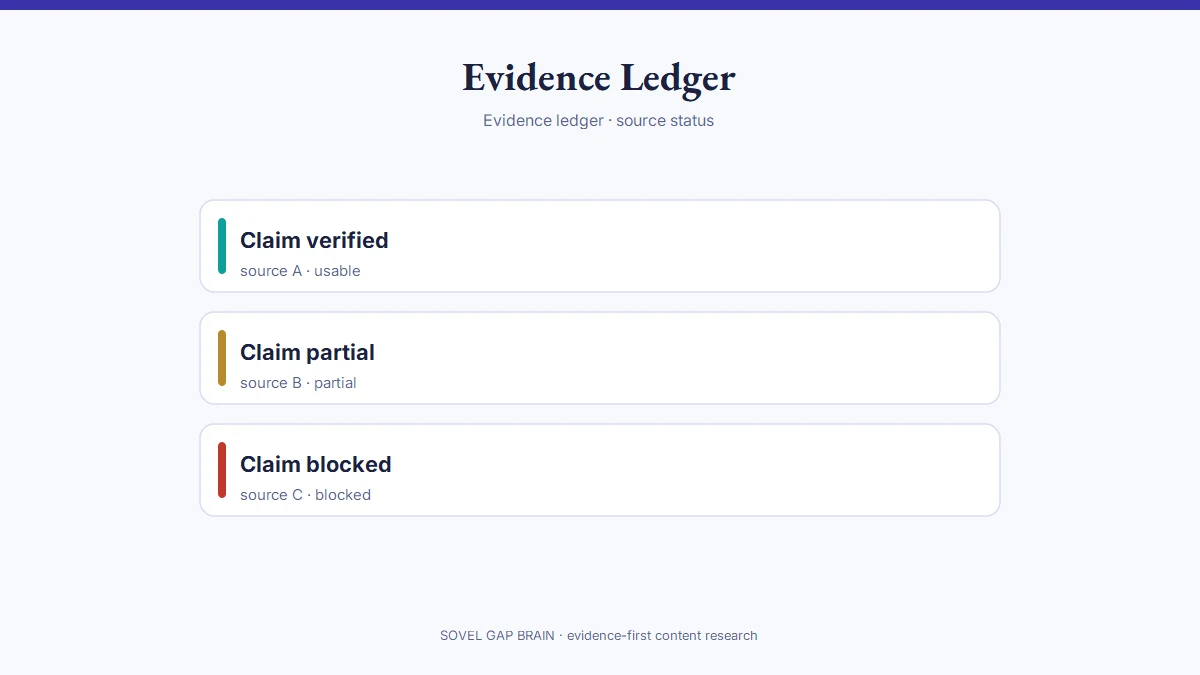
Figure 2: Track each claim with its source and verification status.
Step 2: Plan articles around questions the evidence can answer
Once you have a ledger, you plan articles around the questions it can answer. Group your verified claims into topics. For each topic, ask what questions those claims support. Those questions become your article ideas.
This reverses the usual order. Most teams pick a keyword first and then hunt for facts to fill the article. An evidence based strategy picks the verified facts first and then finds the questions they answer. The result is content that is never padded with unverifiable filler, because every section has a real claim behind it.
This also makes your content more original. When you build from your own verified research, you naturally produce angles that competitors who write from generic sources do not have. Original, sourced facts are the strongest asset you can publish, and they are the currency of evidence based content strategy.
One practical way to do this is to keep a column in your ledger for the question each claim answers. Over a few weeks, that column fills up with dozens of question-and-claim pairs. Those pairs are your article backlog. You are no longer guessing what to write. You are matching verified facts to the questions people actually ask, which is the heart of an evidence based content strategy.
As you match claims to questions, you will notice that some strong claims answer several questions at once. That is fine. It means the claim can anchor more than one article, and you can reuse it across your content with different framing. Reuse is not duplication when each article answers a different question, and it is one of the subtle efficiencies that makes an evidence based content strategy productive.
Step 3: Check the gap between questions and coverage
With your article ideas set, check which of those questions your site already answers. The GAP BRAIN engine does this comparison for you, scoring the gaps by opportunity. You end up with a prioritized list of articles to write, each grounded in evidence and each filling a real hole.
Prioritize by value, not just volume. A question that matters to your best customers and that you can answer with strong sources is worth more than a high-volume question you can only answer weakly. The opportunity score from the engine factors both in, so you can make that trade-off with data rather than gut feel.
This step turns your evidence ledger into a content calendar. The calendar is not a list of topics. It is a list of verified gaps, each with the evidence attached and the article to write. That calendar is the most concrete output of evidence based content strategy, and it is what you hand to your writers so they never sit staring at a blank page wondering what to cover.
Figure 3: The opportunity-scored gap list becomes your editorial calendar.
Step 4: Write with the source trail visible
When you write the article, keep the source trail visible. Link each major claim to its primary source. Use the answer-first structure so the article is quotable. State the claim precisely enough that someone can check it.
Keep paragraphs short and use lists and tables where the content genuinely fits. This makes the article easy to read and easy for an AI system to parse. The combination of clean structure and visible sources is exactly what makes a page citable, and it is a direct payoff of adopting an evidence based content strategy in the writing stage.
Resist the urge to over-cite. A single strong primary source, or two, carries a major claim. The aim is to be the version of that answer a machine can quote without risk, because the trail back to the facts is visible. Over-citing clutters the page and dilutes the signal, so keep the source trail clean and purposeful.
When you write, put the claim first and the source right behind it. “The average roof replacement takes two days, per the manufacturer’s installation guide” reads clearly and cites in one breath. That pattern is easier for a reader to trust and easier for an AI system to lift, which is why it belongs at the center of an evidence based content strategy in practice.
Figure 4: Keep the source trail visible so readers and AI systems can verify your claims.
Step 5: Refresh the ledger and the content
An evidence based content strategy is a living system. Sources go stale, new research appears, and older claims need updating. So you refresh both the ledger and the content on a schedule.
Re-run your research monthly. Add new verified claims, mark old ones that have changed, and flag content that needs an update. Refresh your highest-value articles so they stay the reliable version of the answer. This freshness loop is what keeps your authority compounding over time, and it is the step most teams skip after the first push.
A monthly refresh is usually enough for most topics, but you can go more often for fast-moving fields. The key is that the refresh is targeted. You are not redoing your whole strategy. You are checking which claims changed and updating only the articles those claims touch, which is another reason an evidence based content strategy is less costly to sustain than a keyword-first one.
Common mistakes that break the strategy
Even with a good plan, a few mistakes can quietly undermine an evidence based content strategy. The first is treating the ledger as a one-time research dump instead of a living record. If you never update it, it decays and your claims go stale. The second is citing a source you have not actually read, which defeats the entire purpose of verification.
The third mistake is over-claiming. If your source supports a narrow claim, do not stretch it into a sweeping one. A clean, honest claim that matches its source is worth more than an impressive claim that does not. The fourth is ignoring the status field and publishing claims whose sources are marked blocked or partial, which reintroduces exactly the risk the strategy is meant to remove.
The final mistake is neglecting the monthly refresh. A strategy that looks strong in January can look outdated by July if nothing is re-checked. Build the refresh into your calendar like any other task, and your evidence based content strategy will keep paying off rather than silently eroding.
How the GAP BRAIN engine fits
The SOVEL GAP BRAIN engine is built for exactly this workflow. It pulls live research for a topic, scores the questions and keywords, finds the gaps, records the evidence, and writes a multi-format report. That report is your evidence ledger for the topic, ready to feed your article plan.
Because it runs locally with free public sources, it needs no API key and no signup. It also records the status of every source, so you know which claims are safe to publish and which are still blocked or partial. That transparency is what makes it a natural companion to an evidence based content strategy rather than just another research tool.
Edition and licence details are on the product page. For the related method of checking what your coverage already answers, the site’s guide on finding content gaps in existing content supports this strategy.
How evidence-based strategy changes your publishing
The biggest shift is that you stop starting with keywords and start starting with facts. That changes every downstream decision. Your titles come from verifiable claims rather than search-volume guesses. Your sections come from the questions the evidence supports. Your links come from the sources you trust.
This also changes how you talk about your work. Instead of saying you publish a lot of content, you can say you publish verified, sourced answers to real questions. That is a stronger position for readers, for search engines, and for the AI systems that decide what to cite. An evidence based content strategy gives you a defensible story about why your content deserves attention.
It changes your workflow too. Research becomes a first-class step instead of an afterthought. Every article has a paper trail, every claim has a status, and every update is targeted. The result is a publishing operation that is more honest, more original, and easier to maintain, which is why so many teams are adopting an evidence based content strategy as their default way of working. For the citation side of the same discipline, see generative engine optimization content gaps, and for the brief that carries the evidence into writing, see the SEO content brief guide. Google’s Search Quality Rater Guidelines show how human raters judge the same signals.
FAQ
What is an evidence based content strategy?
It is a way of planning your publishing around claims you can verify and trace to a source, so every article is built on proof rather than guesses.
Why does evidence-first content perform better?
It is more useful to readers, more credible to search engines, and more likely to be quoted by AI answer systems because it can be verified.
What is an evidence ledger?
It is a running record of every verified claim with its primary source, URL, and verification status. It is the raw material for your content planning.
How do I start an evidence ledger?
For each fact you plan to publish, record the claim, the source, the URL, and the status. Start with the gaps your research surfaces, which the GAP BRAIN engine can supply.
Do I need to cite a source for every sentence?
No. Cite a strong primary source, or two, for each major claim. The goal is to make your page the well-sourced version of the answer.
How is this different from writing to a keyword?
Keyword-first writing picks the search term and then hunts for facts. Evidence-first writing picks the verified facts and then finds the questions they answer, which produces more original, defensible content.
How often should I refresh my evidence?
About monthly. Re-run your research, add new verified claims, mark changed ones, and update the highest-value articles so they stay current.
Can a small team run an evidence-based strategy?
Yes. The method scales with a simple ledger and a monthly research habit. You do not need a big team, only the discipline to verify before publishing.
Does evidence-based content help with AI citations?
Yes. AI answer systems are more likely to quote pages that state checkable claims and cite primary sources, which is exactly what this strategy produces.