
Topical authority SEO is the practice of building a site that search engines and AI systems trust as a source on one subject. Authority is not earned by a single good page. It is earned by covering a topic deeply, consistently, and accurately so that the patterns the engine sees make your site the obvious reference. This guide explains how topical authority SEO works and gives you a six-step method to build it.
The short answer: topical authority SEO is built by covering one topic completely with well-structured, sourced content that links together into a clear whole. As your coverage deepens, search engines and AI systems begin to treat your site as an authority on that subject, which lifts your rankings across the entire topic.
One note before the steps. Topical authority SEO is a long-term game, and it does not reward shortcuts. You cannot fake depth. The method below is about doing the patient work of complete, honest coverage, and that is exactly why it holds up over time.
What topical authority actually means
Authority in search is a measure of trust. When a search engine sees your site repeatedly produce accurate, comprehensive content on a topic, it raises your site’s authority for that topic. This is different from domain authority in general, which is a broader measure. Topical authority is specific to a subject, and it is what you want to build for your core topics.
AI systems use a similar idea. When an answer engine looks for a source on a topic, it prefers sites that have a coherent body of content about it. A site that covers a subject from many angles, with clean structure and verifiable sources, reads as more reliable than a site with one thin page.
So topical authority SEO is not about a single ranking. It is about becoming the site that a search engine or AI system considers the reference for a topic. That position compounds, because every extra piece of good content reinforces the impression of depth.
Figure 1: Topical authority grows as your coverage of a subject deepens.
Step 1: Pick a topic you can cover deeply
Topical authority SEO starts with a choice. Pick a topic you can realistically cover deeply and better than most. The topic should be narrow enough to master and broad enough to support many pages. A topic like “roof repair” is a good scale, while “home maintenance” is too wide and “how to patch a leak” is too narrow alone.
Your depth comes from showing you can answer the full range of questions on the topic. If you can only write a few pages without repeating yourself, the topic may be too small. If you cannot cover it without spreading thin, it may be too large. The right topic sits in the middle.
This choice shapes everything downstream. Your pillar pages, your supporting pages, your internal links, and your sources all hang on the topic you pick, so choose one that fits your knowledge and your business.
Step 2: Map the full topic before you write
Before writing pages, map the topic completely. List every key subtopic and question a reader might have. This map is your coverage plan, and it prevents you from publishing random pages that do not build a coherent body of work.
Break the topic into a set of core ideas and related ideas. For roof repair, core ideas might include the types of repairs, the materials, the costs, and when to repair rather than replace. Each core idea becomes a cluster with its own supporting pages.
Use the questions people actually ask to build this map. The GAP BRAIN engine pulls live search signals and returns the questions around your topic, and the map you build from those questions is grounded in real demand rather than guesswork.
Figure 2: A complete map of the topic guides which pages to build.
Step 3: Build a pillar with supporting clusters
With the map in place, build a pillar page for the topic and supporting pages for each core idea. The pillar is the broad, in-depth overview that links down to the supporting pages, and the supporting pages answer specific questions and link back up.
This structure mirrors how expertise looks in the real world. A specialist knows the broad field and the specific details, and both are linked in their mind. Your site should mirror that, with the pillar as the broad view and the supporting pages as the details. This is the structural heart of topical authority SEO.
Keep the internal links meaningful. Every supporting page should link to the pillar and to related supporting pages. This web of links helps both users and search engines move through your coverage, and it signals that all the pieces belong to one topic.
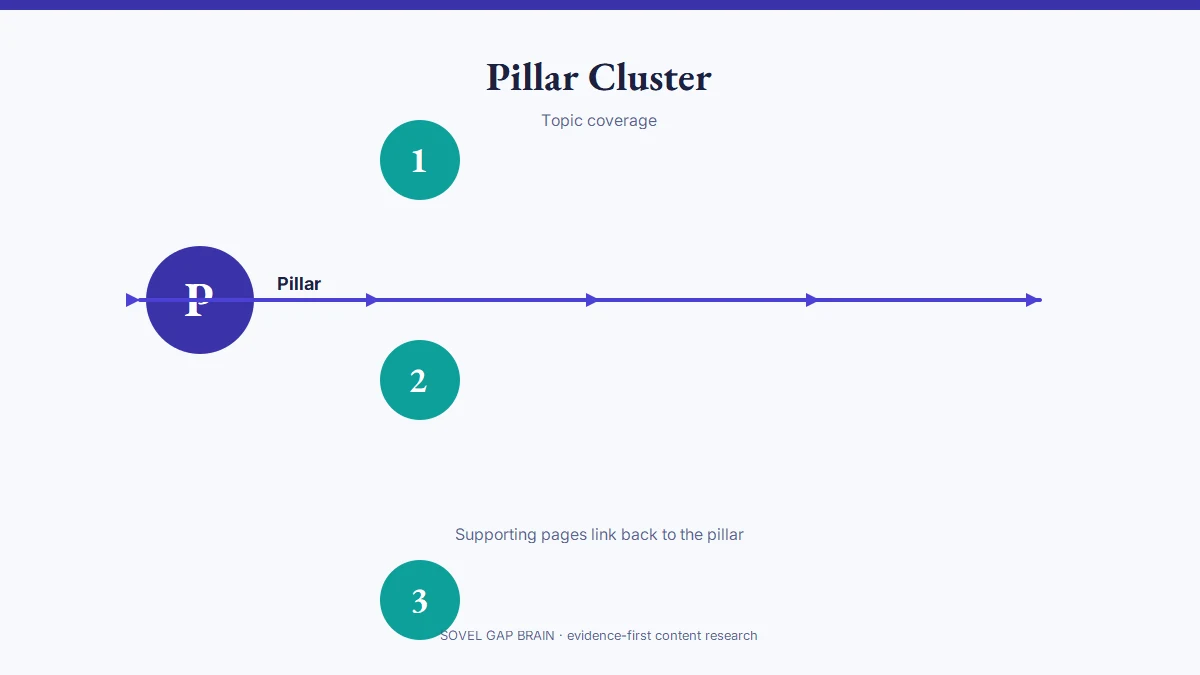
Figure 3: A pillar page links to supporting clusters that link back.
Step 4: Cover questions thoroughly with evidence
Depth is not just volume. It is completeness with accuracy. Each page should answer its question fully and back its claims with evidence. A site that states verifiable facts with sources reads as more trustworthy, and trust is the core of topical authority SEO.
Keep an evidence ledger of the sources behind your claims, with the URL and the status of each source. Reuse that ledger when you write so every factual claim has a source you can point to. This is what separates a truly authoritative site from a site that just publishes a lot.
The GAP BRAIN engine produces this ledger as part of its research runs. It records where each finding came from and whether the source is usable, blocked, or partial, which gives you an honest base for your coverage.
Step 5: Link your content into a coherent whole
Authority also comes from how your content connects. A site where every page stands alone does not look like a body of knowledge. A site where pages cross-link around a topic looks like a subject that has been studied deeply.
Link related pages to each other using descriptive anchor text. When a supporting page references an idea covered elsewhere, link to that page. This stitches your content into a whole, and it gives readers a path through your expertise while showing engines the relationships between your pages.
Audit your links over time. Add links you missed and remove or fix broken ones. The coherence of your internal linking is a part of topical authority SEO that is easy to overlook and valuable to maintain.
Step 6: Refresh, expand, and measure
Topical authority SEO is a living effort. Refresh your highest-value pages on a schedule so they stay current. Expand into new related questions as they emerge, and measure which parts of your topic are gaining traffic and which are still thin.
Re-run your gap analysis periodically. The GAP BRAIN engine shows which questions around your topic you still do not answer, which are your next expansion targets. Over time this loop keeps your coverage moving toward complete, and each completed gap adds to your authority.
How the GAP BRAIN engine supports topical authority
The SOVEL GAP BRAIN engine fits this strategy at the planning and expansion stages. It finds the questions around your topic, checks which your site already answers, and scores the gaps by opportunity. That list tells you exactly which supporting pages to add next to deepen your topical authority.
Because it records evidence for every source, it also helps you keep your coverage accurate and trustworthy, which is the foundation of authority. You can compare editions on the product page. For the related method of structuring content around meaning, the site’s guide on semantic SEO strategy pairs well with this approach.
How authority shows up in rankings
Topical authority SEO changes how your pages perform across a topic. Early on, you may rank for only a few specific queries. As your coverage deepens, the search engine begins to trust you more broadly, and more of your pages start appearing for related terms. This broadening is a visible sign that your topical authority SEO is working.
You may also notice your pages appearing for questions you did not explicitly target. That happens because the engine connects your related content and infers you cover the topic. It is a compounding effect, and it is one of the most powerful outcomes you can build for your site.
The engine is not the only one that notices. AI answer systems also prefer a site with a coherent body of content on a topic. When your coverage is deep and well-linked, you become a natural source for AI answers too, which extends your reach beyond the classic results page.
Keeping your coverage accurate and current
Accuracy is the foundation of topical authority SEO. A single factual error can cost trust, so every claim needs a verifiable source. Keep an evidence ledger and check the status of each source before you publish, because a claim built on a weak source is a risk to your authority.
Content also goes stale. Prices change, statistics age, and best practices move on. Refresh your pages on a schedule so your coverage stays the current version of the topic. A site that updates its facts looks alive and trustworthy, while a stale site looks abandoned.
The refresh does not need to be heavy. Update the key statistics, revisit the sources, and adjust any claims that changed. A small, regular refresh keeps your topical authority SEO compounding without demanding a full rewrite each time.
Expanding into new questions over time
Your topic map is not fixed. New questions appear as tools change and as people find new problems, and a complete coverage plan grows with them. Re-visit your map several times a year and add the new questions that have emerged.
Use a gap analysis to find them. The GAP BRAIN engine shows which questions around your topic you still do not answer, each with an opportunity score, so you can add the most valuable new pages first. That keeps your topical authority SEO progressing.
Every new page you add extends your coverage and gives the engine another reason to trust you. Over time, the expansion turns a good site into a complete reference, which is the ultimate goal of topical authority SEO. The work is steady, and the results accumulate.
How to audit your own topical authority
You can audit your topical authority SEO by looking at your site as the engine sees it. List every page in your topic and check three things: does it answer a real question, does it link sensibly to related pages, and does it carry verifiable sources? A page that lacks any of these is a weak point.
Check your internal links for gaps. Are the supporting pages connected to the pillar and to each other? Are there useful pages you forgot to link? Fill those gaps, and the coherence of your topic improves immediately.
Finally, look at your weakest pages. If a page ranks poorly, it may be too thin, poorly linked, or under-sourced. Improving the weakest part of your coverage often lifts the whole topic. Auditing this way gives you a clear list of improvements for your topical authority SEO.
Common mistakes in building topical authority
A few mistakes slow down topical authority SEO. The first is choosing too broad a topic, so the coverage thins out. The second is publishing many thin pages instead of fewer deep ones. The third is neglecting internal links, so the site never reads as a coherent whole.
The fourth mistake is letting content go stale without refresh. The fifth is covering only the popular questions while ignoring the related ones that complete the topic. Avoiding these keeps your authority building at a steady pace.
Figure 4: Audit each page for a clear question, sensible links, and sources.
The relationship between authority and citations
Topical authority SEO and AI citations support each other. When you build deep, sourced coverage of a topic, AI answer systems are more likely to quote your pages, because your site looks like a reliable reference. That is exactly what strong topical authority SEO produces, and it turns into a durable advantage over time.
A page that gets cited by an AI system earns visibility it cannot get from rankings alone. And a site that is visibly cited tends to be trusted more broadly by search engines too. So investing in topical authority SEO feeds your citation strategy as well as your rankings, and the loop strengthens your topical authority SEO further as both grow.
You can encourage both by keeping your coverage complete and current, linking it coherently, and sourcing every claim. Each of those actions makes your site more useful to every system that reads it, which is why the two efforts naturally go together within a single topical authority SEO program. The pair is a large reason that authority, once built, keeps paying off. If you are building the cluster itself, the evidence based content strategy guide covers the sourcing that makes authority defensible, and the SEO content brief guide covers the page-level plan. Google’s Search Quality Rater Guidelines are the primary reference for how trust is assessed.

Figure 5: Authority and citations reinforce each other over time.
FAQ
What is topical authority SEO?
It is building a site that search engines and AI systems trust as a source on one subject by covering it deeply, accurately, and with coherent links.
How long does it take to build topical authority?
It is a long-term effort, usually many months of consistent, complete coverage. The compounding effect grows as your body of content deepens.
Does topical authority help rankings across the whole topic?
Yes. As the engine trusts you on the topic, more of your pages can rank for related queries, not just the one keyword you targeted.
What is a pillar page?
A pillar page is a broad, in-depth overview of a topic that links down to supporting pages on specific subtopics. It anchors your coverage for that topic.
How is topical authority different from domain authority?
Domain authority is a broad measure of a whole site. Topical authority is specific to one subject. You can be authoritative on one topic and not on others.
Do I need evidence to build authority?
Yes. Accuracy is part of trust. Sourcing your claims shows the engine and readers that your coverage is reliable, which supports authority.
How do I know which related pages to add next?
Run a gap analysis on your topic. The GAP BRAIN engine shows the questions you still do not answer, ranked by opportunity, so you know what to build next.
Can a small site build topical authority?
Yes. Depth and coherence matter more than site size. A small site can become an authority on a narrow topic faster than a large site can on a broad one.