
A semantic SEO strategy is a way of organizing your content so search engines and AI systems understand what your site actually covers, not just which words you happen to use. Search engines have moved beyond matching single keywords to matching meaning, entities, and relationships between ideas. This guide explains how to build a semantic SEO strategy that matches that reality, and it gives you six practical steps backed by the evidence-led method.
The short answer: a semantic SEO strategy is built around topics and entities rather than isolated keywords. You map what people mean, cover the related ideas around your main topic, and structure each page so a machine can understand the relationships. Do that consistently and your site becomes one a search engine trusts on the whole topic.
One important clarification up front. A semantic SEO strategy is not about stuffing more words onto a page. It is about showing depth through structure, related coverage, and clean hierarchy. The point is to prove to a search engine that your site genuinely knows the topic, and you prove that by covering it completely and logically rather than by repeating phrases.
What semantic search actually looks for
To build a semantic SEO strategy, you need to know what semantic search wants. Modern search engines represent your page not as a bag of words but as a set of entities and the relationships between them. An entity is a distinct thing, such as a person, a product, a place, or a concept. The relationships are the connections, such as “company X sells product Y” or “topic A relates to topic B.”
When someone searches, the engine tries to match their intent to the entities and relationships on your page. This is why a page that mentions “roof repair,” “cost,” “metal,” and “warranty” can satisfy a query about the cost of a metal roof repair even when the exact phrase never appears. That matching is the core of semantic search, and a semantic strategy works with it rather than against it.
You can see this in how search results now show knowledge panels, related questions, and topic groupings. These features come from the engine understanding entities and connections across the web. If your content is structured so those connections are clear, you increase your chances of appearing in them.
Figure 1: Semantic search matches entities and relationships, not just keywords.
Step 1: Define the core entity and its relationships
Your semantic SEO strategy starts with the core entity of your page or site. Ask what the single most important thing is that this content is about. For a page about roof repair, the core entity is roof repair as a topic, and everything else on the page should relate to it.
Once you name the core entity, list the relationships around it. What related entities does it connect to? For roof repair those might be types of roofing materials, the cost factors, the average lifespan, hiring a contractor, and building codes. Each related entity becomes a candidate for a section, a linked page, or a piece of supporting content.
Writing these relationships down on one sheet gives you a mini knowledge graph. That graph is the skeleton of your semantic SEO strategy. It shows you what to cover and how the pieces connect, so you never build random pages that do not point back to your core topic.
Step 2: Group content into topic clusters
With the relationships mapped, group your content into topic clusters. A topic cluster has one pillar page that covers the core entity broadly, and several supporting pages that cover specific related entities in depth. The pillar acts as the hub, and the supporting pages link up to it and to each other.
For example, a pillar page on “roof repair guide” might have supporting pages on “metal roof repair,” “flat roof repair,” “roof repair costs,” and “when to repair vs replace.” Each supporting page answers one specific question well, and all of them point back to the pillar. This structure is a proven piece of semantic work because it shows the engine the full shape of your topic.
Clustering also helps your readers. A person who lands on a supporting page can move to the pillar or to a neighboring page naturally. You are building a guided path through your knowledge, which increases time on site and signals relevance.

Figure 2: A pillar page with supporting pages forms a topic cluster.
Step 3: Match content to search intent
Semantic search is intent-driven, so your semantic SEO strategy must match each piece of content to the intent behind the query. Intent is usually one of four types: informational, meaning the person wants to learn; navigational, meaning they want to reach a specific site; commercial, meaning they are comparing options; and transactional, meaning they are ready to act.
A single keyword can have multiple intents, and the page you build must match the intent you target. If a query is informational, a long guide works. If it is transactional, a product or pricing page works better. Matching intent is a large part of ranking because the engine measures whether your page satisfies what the searcher actually wants.
When you plan content, write the intent next to each keyword. That habit forces you to build the right type of page for each query, which is a core discipline of any serious semantic approach.
Step 4: Use entities and schema to clarify meaning
A semantic SEO strategy benefits from markup that tells the engine exactly what the entities are. Schema markup, structured data you add to your page, lets you label a thing as a product, an article, a person, an FAQ, or a rating. This gives the engine an explicit signal about what your content is, and it supports rich results such as FAQ snippets.
Use the schema that matches your content type. An article page can use Article or BlogPosting schema. An FAQ section can use FAQPage schema. A product page can use Product schema. You do not need every schema type on every page. Use the ones that genuinely describe what is there, because misplaced markup can hurt trust.
Schema is not a magic switch. The engine still has to understand the content, and markup only clarifies what is already there. But combined with clear content, it is a reliable part of the method.
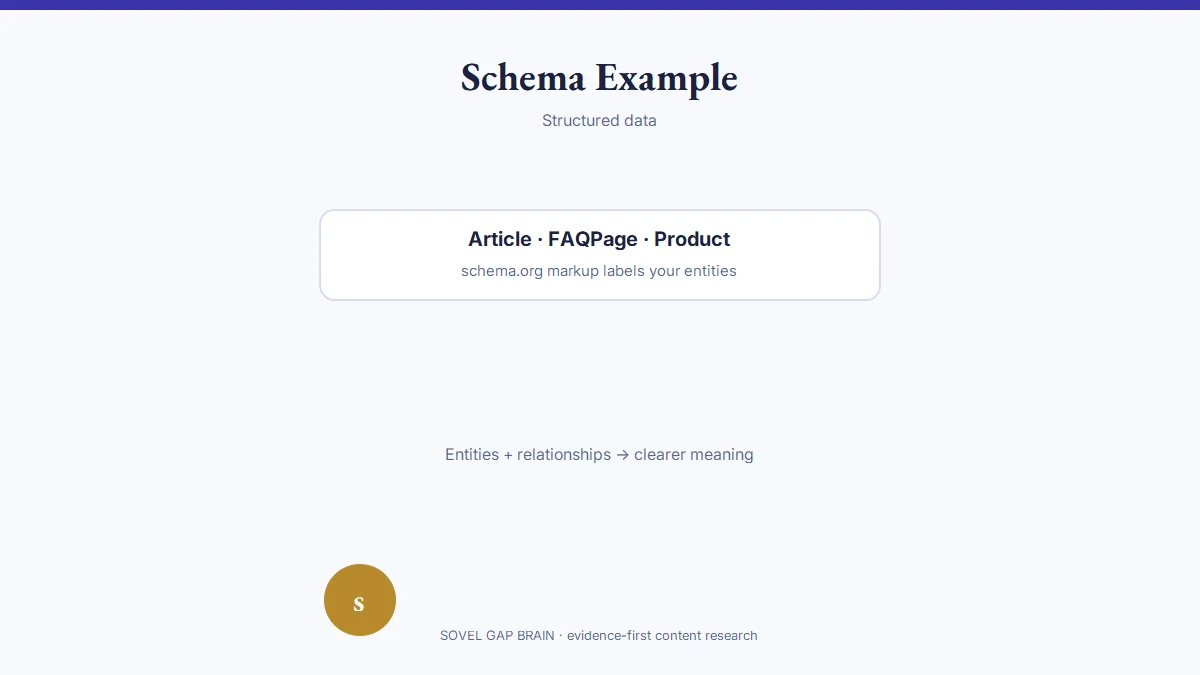
Figure 3: Structured data labels your entities clearly for search engines.
Step 5: Cover the related and long-tail ideas
A gap in your semantic SEO strategy is often a missing related idea. If you cover the core topic but never touch the related entities, you leave a hole the engine notices. Fill those holes with dedicated sections or supporting pages that answer the specific related questions.
Long-tail queries are where these related ideas show up most. A query like “what is the best metal for a roof in a coastal climate” combines the core entity with a specific condition. A page or section that answers it adds depth the general topic page lacks. This is where semantic coverage earns some of its biggest wins, because long-tail pages are both specific and winnable.
The GAP BRAIN engine helps here. It finds the questions around your topic, checks which ones your site already answers, and shows you the gaps by opportunity. That scored list converts your semantic SEO strategy from guesswork into a clear build plan.
Step 6: Track, refresh, and expand
A semantic SEO strategy is never finished. Search behavior changes, new entities appear, and your competitors expand their coverage. So measure what works, refresh what goes stale, and expand into new related ideas over time.
Track which pages in your topic cluster earn the most traffic and which related questions still come up unanswered. Refresh your pillar and high-value pages on a schedule so they stay the most complete version of the topic. Expand by adding new supporting pages as the GAP BRAIN engine surfaces new gaps. This loop is what keeps your semantic SEO strategy compounding.
How the GAP BRAIN engine supports the strategy
The SOVEL GAP BRAIN engine fits this strategy at the research stage. Give it your core topic and it pulls live search signals, finds the questions and related keywords, checks your existing coverage, and scores the gaps you could fill. The result is a prioritized list that tells you which related entities to cover next.
Because the engine records evidence for every source, you can also verify that the facts behind your expanded coverage are solid. Pricing and scope for each edition sit on the product page. For the broader methodology of turning evidence into a content plan, the site’s article on evidence-led content research is a useful companion.
Semantic SEO and AI answer engines
A semantic SEO strategy also positions you for AI answer engines. Much like search engines, AI systems match meaning and structure. A page that clearly covers a topic, uses consistent entities, and answers direct questions is easier for an AI system to parse and quote. That makes the same semantic work valuable beyond classic rankings.
When your content is organized into a topic cluster with clear relationships, an AI system can see how your pages fit together. That helps it select your content as a source. So a well-built semantic SEO strategy feeds both the search engine and the AI answer layer, giving you two kinds of visibility for one effort.
Entity clarity matters for AI too. If you consistently use the same names and definitions for your core entities, both systems understand you better. A semantic SEO strategy that defines its entities clearly is easier for machines to reason about, which is why this practice keeps growing in importance.
Examples of semantic coverage in practice
Imagine a site about home roofing. A semantic SEO strategy for it would start with the entity of roof repair and then map the related ideas: materials, costs, lifespan, contractors, and local codes. Each becomes a cluster with its own pages, and the pages link back to a pillar on roof repair.
Within each page, the writer uses entity-rich language. A page about metal roofing mentions the relevant types, their typical costs, and their warranties, and it links to the pages that cover those details. That connectedness is what makes the coverage semantic rather than just keyword-dense.
A searcher asking about the cost of a metal roof finds the cost page. A searcher asking about metal roof lifespan finds the lifespan page. Each query lands on the most relevant part, and because the pages are linked, the site as a whole is understood as a complete roofing reference. This is the practical shape of a working semantic SEO strategy. You can start smaller than this and still see results. Pick one topic, build one pillar, cover its top questions well, and link the pages together. The method scales from there, and each cluster you finish strengthens the whole site. Over time the map grows, and so does the understanding the engine has of your coverage, which is the quiet engine of a semantic SEO strategy.
Measuring whether your semantic strategy is working
You can track the health of your semantic SEO strategy with a few signals. Watch whether your topic cluster earns traffic across more of its pages over time. If supporting pages begin ranking for related queries, the engine is recognizing your depth. That broadening is a strong sign the strategy is working.
Also watch for rankings on queries you did not explicitly target. When related pages start appearing for those, it shows the engine understands your topic relationships. It is one of the clearest signs that your semantic SEO strategy is compounding.
Finally, review your rich-result features. If you start earning FAQ snippets or knowledge-panel mentions, your entity and schema work is paying off. Track these over months, because semantic authority builds gradually, and a steady trend is what you want to see. Keep your measurement simple and review it monthly. Consistent tracking is what lets you know when to expand into a new cluster, and it protects the progress you have already made with your semantic SEO strategy.
Common mistakes in semantic SEO
A few mistakes can undermine an otherwise sound semantic SEO strategy. The first is building topic clusters without a clear pillar, so the pages do not connect to a single hub. The second is ignoring intent and writing one style of page for every query, which mismatches what searchers want. The third is treating schema as decoration and adding markup that does not match the content.
The fourth mistake is chasing a few big keywords instead of covering related ideas, which leaves the topic thin. The fifth is never refreshing, so the cluster slowly goes stale. Each of these is avoidable by following the six steps and keeping the cluster coherent, intent-matched, and current. For how coverage turns into trust, see topical authority SEO; for how the same pages get quoted by models, see LLM content optimization. Google’s structured data documentation is the reference for the markup side.

Figure 4: Track how many pages in your cluster gain related-query visibility.
FAQ
What is a semantic SEO strategy?
It is a way of organizing content around topics and entities so search engines and AI systems understand what your site covers, rather than just matching keywords.
How is semantic SEO different from keyword SEO?
Keyword SEO matches the exact phrases people search. Semantic SEO matches the meaning and the relationships between ideas, which lets a page rank for related queries it never states word for word.
Do I need schema markup for semantic SEO?
It helps. Schema labels your entities clearly and supports rich results, but the content still needs to be clear on its own. Use the schema that matches what your page actually contains.
What is a topic cluster?
A topic cluster is a pillar page covering a core topic broadly, with supporting pages covering specific related ideas in depth, all linked back to the pillar. It shows the engine the full shape of your topic.
How do I find the related ideas to cover?
Use the questions people ask, the related searches, and a gap analysis of your own site. The GAP BRAIN engine surfaces these related questions and scores the gaps by opportunity.
How often should I refresh my semantic strategy?
Review your top pages monthly and your whole cluster a few times a year. Refresh what goes stale and add new supporting pages as new gaps appear.
Can a small site use a semantic SEO strategy?
Yes. The method scales from a single pillar page to a full site. Even one well-clustered topic is better than many random pages.
Does semantic SEO help with AI answer engines too?
Yes. AI systems also match meaning and structure. A page a search engine understands well is usually one an AI system can also parse and quote.