
An SGE optimization strategy is a plan for getting your content into the AI-generated answers Google now shows at the top of many search results. These AI answers, sometimes called AI Overviews, summarize information from across the web. When your content is the source of that summary, you gain placement no traditional result can match. This guide explains how SGE works and gives you a six-step strategy to win those AI answers.
The short answer: an SGE optimization strategy is built on clear, answer-first content that asks and answers the question Google’s AI is trying to satisfy, backed by sources the AI can trust. When you provide that, your content becomes a candidate the AI pulls from.
One important point first. SGE is not a separate ranking system you game. It summarizes sources that already exist. The practical implication is that an SGE optimization strategy is largely about making your existing content more quotable, more structured, and more clearly sourced, which helps your classic rankings as well.
How SGE builds its answers
To build an SGE optimization strategy, you need to understand how the system works. When someone searches, Google’s AI reads a set of sources, identifies the passages that answer the query, and generates a summary in natural language. Under the summary, it shows the sources it used. Being cited in that summary is the prize.
The AI favors passages that are clear, self-contained, and relevant to the question. It prefers sources it can trust, which often means well-known, well-sourced pages. It also uses structured content like lists and tables to build its summaries, because those are easy to read and reuse.
This means your goal is not to trick the AI but to make your page the most useful, clearest source for the question. When your content is the best answer, it becomes the natural choice for the summary.
Figure 1: Google’s AI answer summarizes sources, and citation in its summary is the win.
Step 1: Identify questions likely to get AI answers
An SGE optimization strategy starts with the right questions. Not every query gets an AI answer. Informational questions with a clear factual answer are the most likely to trigger one. Questions like “what is the average roof replacement cost” or “how long does a metal roof last” are good candidates.
Focus on the questions your audience actually asks where a generated answer is likely. These are typically well-defined, fact-based, and answerable in a short summary. Match your content to these rather than chasing every possible query.
A GAP BRAIN run returns the live questions around your topic, each scored by opportunity. That list helps you find the questions most worth targeting for SGE.
Step 2: Structure content for answer-first extraction
The AI wants to pull an answer quickly. So structure each section to give the answer first, then support it. Start with a direct, complete answer in the first sentence or two, then expand. This mirror the pattern the AI can lift and summarize.
Use clear headings that match the question. If the query is “how long does a metal roof last,” make sure a section clearly answers that. Use lists and tables where the content is naturally structured, because the AI uses those to build bulleted summaries.
Answer-first structure is the core of an SGE optimization strategy. It gives the AI a clean passage to summarize, and it gives the reader the answer immediately, which is good for everyone.
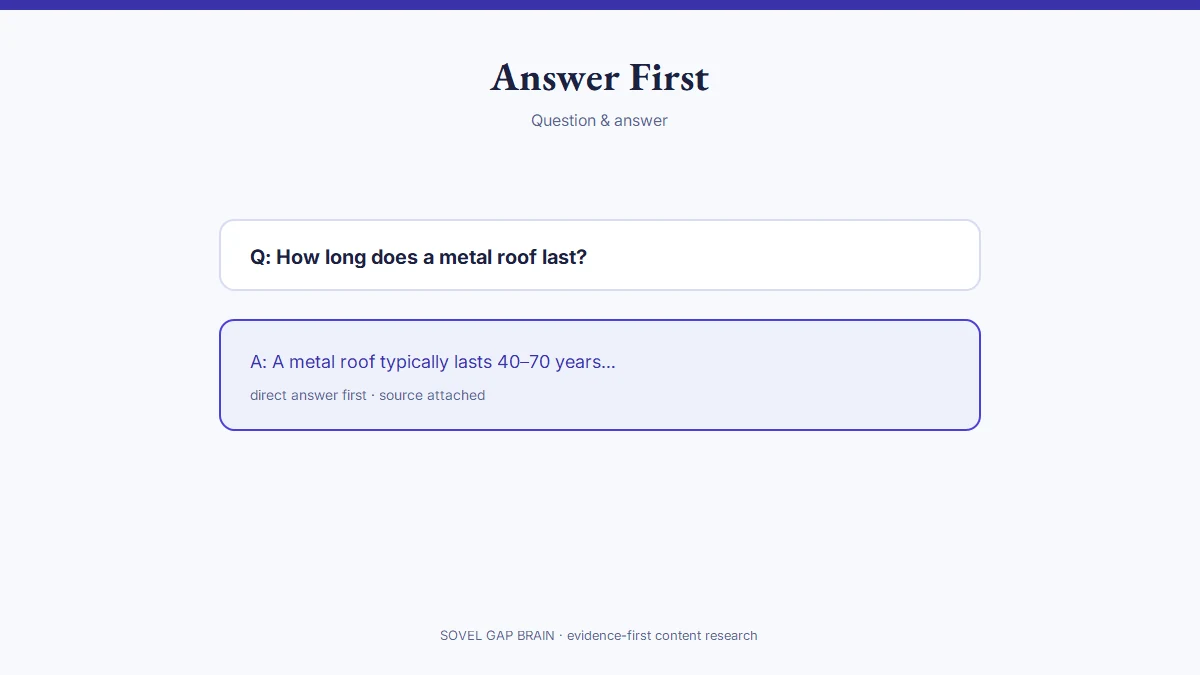
Figure 2: Put the complete answer first so the AI can lift and summarize it.
Step 3: Cite trustworthy, primary sources
The AI prefers sources it can trust. You support that trust by citing reliable, primary sources in your content. Link to original studies, official data, or authoritative reporting rather than to other pages that simply repeat claims.
A page that cites strong sources is more credible as a basis for an AI summary. The evidence-led method fits here. Keep a ledger of the sources behind your claims, with URLs and status, so your content is built on verifiable fact.
Avoid broken or low-quality links. A broken link undercuts trust. Clean, live links to authoritative sources make your page a more reliable candidate for the AI’s summary.
Step 4: Write concisely and conversationally
SGE summaries are concise, and the AI favors sources that are easy to condense. Write in clear, conversational language that states ideas directly. Avoid long, winding paragraphs that are hard to summarize.
Keep paragraphs short, two to four lines. State facts plainly. Use plain words over jargon, and define technical terms when you use them. The easier your sentences are to understand, the more easily the AI can reuse them.
This concise style is not separate from good writing. It is good writing. This approach produces clear, direct content that serves the AI, the search engine, and the reader at once.
Figure 3: Clear, direct sentences are easy for the AI to condense into a summary.
Step 5: Cover the question fully and related angles
The AI summarizes the best answer it can find. If your coverage is partial, the AI may stitch a summary from competitor sources. So cover the question completely, and include the related angles people ask about alongside it.
For a question like “what does a roof replacement cost,” cover the factors that affect cost, the typical price ranges, and when to get a quote. Full coverage gives the AI everything it needs in one place, which makes your page the obvious source.
Use your gap analysis to find what is missing. The GAP BRAIN engine shows which questions around your topic you still do not answer, so you can fill the gaps and make your coverage complete enough for the AI to rely on.
Step 6: Refresh and measure your AI visibility
An SGE optimization strategy is not a one-time task. AI answers change as search behavior and content evolve. Refresh your high-value pages so they stay current, and measure whether your content appears in AI answers.
Check regularly by searching the questions you target and noting whether your content appears in the AI summary and as a cited source. Track this over time. If a question you cover is answered from a competitor, tighten your answer, your structure, or your sourcing. The refresh-and-measure loop keeps your strategy working.
How the GAP BRAIN engine supports the strategy
The SOVEL GAP BRAIN engine helps at the research and gap-finding stages. It pulls live search signals, returns the questions around your topic, checks your coverage, and shows the gaps by opportunity. That list tells you which SGE-worthy questions to write for next.
Because the engine records evidence for every source, it also helps you keep your content credible, which matters for AI trust. The product page sets out the three editions. For the related method of getting cited by AI answer engines, the site’s guide on LLM content optimization works alongside this strategy.
How SGE answers appear in search results
Understanding the layout helps you target your SGE optimization strategy. When Google generates an AI answer, it typically appears at the top of the results page in a distinct box. Below the summary text it lists the sources it drew from. Being one of those listed sources is the goal. Getting your wording into the summary itself is even better.
The AI answer often includes supporting elements. It may show related questions, a list of key points, or a small set of links alongside the summary. These elements come from structured content on source pages, which is another reason clean lists and tables matter. An SGE optimization strategy that produces structured content has a better chance of feeding those elements.
It is worth knowing that not every search shows an AI answer. Simple navigational queries and very niche questions often do not trigger one. This is why picking the right questions matters as much as writing well. Your SGE optimization strategy should focus where AI answers actually appear, so your effort pays off. Both placements matter to an SGE optimization strategy, because each is a win for your visibility.
How to match the format of AI answers
AI summaries tend to follow a pattern. They open with a direct answer, then add a few supporting facts, and sometimes close with a caveat. You can mirror that shape in your content. Write the direct answer first, support it with clear facts, and address any limits or conditions. This alignment makes your passage easy for the AI to reuse.
Using the exact wording of the question also helps. If the query uses specific terms, include those terms in your heading and first sentence. The AI matches the question to passages that contain its language. Matching that language is a practical part of an SGE optimization strategy.
Keep the core answer short enough to be summarized. A summary condenses sources into a few sentences, so your best answer should be compact and quotable. You can provide depth after the direct answer, but the first part must be something the AI can quote almost as-is.
Building an SGE content model that compounds
One run is not a strategy. An SGE optimization strategy compounds when you treat every page as part of a system. Map the questions for your topic, categorize them by likelihood of triggering an AI answer, and build content for each category in priority order. Over time you build a library of AI-worthy answers.
As the library grows, your site becomes a more consistent source for the subject. Google’s AI may return to your site again and again for related questions because it already trusts your coverage. That compounding effect is the real payoff of a patient SGE optimization strategy.
You also gain visibility beyond the AI answer itself. The same clear, sourced content helps classic rankings and other AI systems. So the work of an SGE optimization strategy overlaps with your broader SEO and content goals, which makes it a good investment of effort. The same principle applies to your existing best pages. Refit them to be answer-first and well-sourced, and they become eligible for AI answers without new content. That quick win is often the fastest return on an SGE optimization strategy.
A practical example of SGE targeting
Consider a roofing business. A strong SGE optimization strategy would target questions like “what does a roof replacement cost” and “how long does a shingle roof last.” The business writes a page that answers each directly, cites manufacturer data and industry surveys, and structures the answer with headers and a table.
When a homeowner asks Google how long a shingle roof lasts, the AI reads this page, finds the clear answer, and includes it in the summary with the page listed as a source. The roofing business earns placement it could not buy and that appears above every organic result. That is the outcome an SGE optimization strategy is designed to produce.
Repeat that pattern across twenty questions and the business becomes an authority the AI pulls from regularly. The strategy is not complicated, but it is systematic, and that consistency is what compounds. Keep a list of the questions you have covered and revisit it quarterly, and you can follow the same playbook for any niche, because the SGE optimization strategy transfers across industries.
Common mistakes in SGE strategy
A few mistakes undermine an SGE optimization strategy. The first is targeting queries that are unlikely to get AI answers, such as overly narrow or navigational ones. The second is burying the answer so the AI cannot lift a clean passage.
The third mistake is weak sourcing that gives the AI no reason to trust you. The fourth is dense, hard-to-summarize writing. The fifth is never measuring your AI visibility, so you keep working without knowing what wins. Avoiding these keeps your strategy effective.
Measuring AI citation success
Measuring whether your SGE optimization strategy works requires checking the actual AI results. Search the questions you target regularly and note whether your content appears in the AI summary and as a listed source. Record the results over time so you can see trends.
If you notice a question slipping from the summary, revisit that page. The likely causes are a stale fact, a weak source, or a competitor who wrote a cleaner answer. Fixing those is direct work tied to your SGE optimization strategy, and it keeps your coverage strong.
A simple spreadsheet tracking each target question, its date checked, and whether you appeared is enough. Over a few months you will see which parts of your strategy earn visibility and which need rework. That evidence turns your SGE optimization strategy from guesswork into a measured process. Over time this record also shows which topics deserve more content. When a question wins repeatedly, consider expanding it into a family of related pages, each targeting a nearby query. That expansion grows your presence in AI answers across the whole subject and keeps your SGE optimization strategy moving toward fuller coverage. For the gap-finding step that decides what to publish, see generative engine optimization content gaps. Google’s AI features documentation is the primary reference for how these summaries are generated.
Figure 4: Track whether your content appears in AI answers so you know what works.
FAQ
What is an SGE optimization strategy?
It is a plan for getting your content into Google’s AI-generated answers by making your pages clear, answer-first, well-structured, and well-sourced.
What is SGE in Google?
SGE stands for Search Generative Experience, Google’s AI-generated answers that summarize sources at the top of some search results.
Which queries get AI answers?
Informational questions with clear factual answers are most likely to get an AI answer. Well-defined, fact-based questions are the best targets.
How do I get cited in an AI answer?
Answer the question clearly and first, use structured formats, and cite trustworthy primary sources. Make your page the most useful source for the question.
Does SGE hurt traditional rankings?
It changes the landscape, but good SGE optimization also improves classic rankings because it relies on clear structure, good sourcing, and full answers.
Do I need special tools for SGE?
A gap analysis helps you find the right questions to target. The GAP BRAIN engine finds those questions and shows the gaps in your coverage.
How often should I refresh for SGE?
Refresh high-value pages on a schedule and measure your AI visibility monthly. AI answers change, so staying current matters.
Can small sites win AI answers?
Yes. The AI favors the clearest, best-sourced answer, not the biggest site. A small site that answers a question best can be cited.