Verification Engines • November 18, 2026
To verify ai content before publishing is to answer one question per claim: does a source say the same thing about the same subject, dated recently enough to still be true. Four checks produce that answer, and the four are what people skip when they verify ai content before publi
Verification Engines • November 18, 2026
Every agency eventually receives the email. It arrives three weeks after a deliverable shipped, it is polite, and it asks one question: where did this number come from. The answer decides what happens next. If it is a screenshot from a memory, the conversation becomes about trust
Verification Engines • November 18, 2026
An ai hallucination checker answers one question: does this sentence have a source that says the same thing about the same subject. An ai detector answers a different question: does this text look machine written. Both products exist, both are sold under similar names, and buying
Verification Engines • November 18, 2026
AI content verification is not a review, and it is not a checklist either. A review is an opinion about a draft, delivered by someone who is usually tired. AI content verification is a decision about each claim, delivered with the evidence attached and a date on it. The differenc
Verification Engines • November 18, 2026
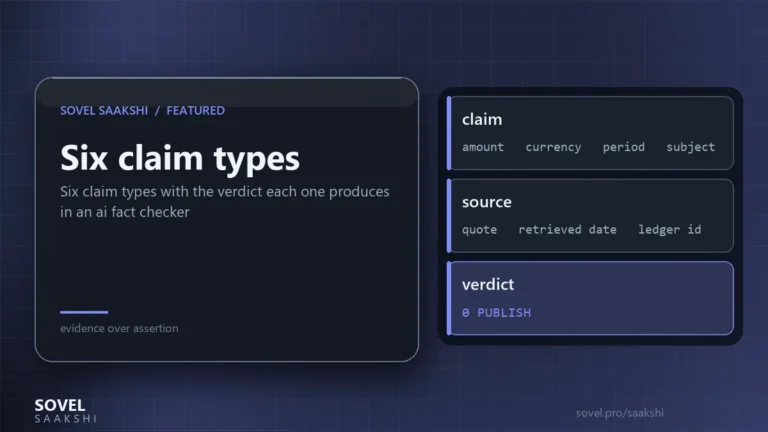
An ai fact checker reads a draft, separates sentences that carry a checkable claim from sentences that carry an opinion, and then checks each claim against a source you supply. That is the whole of it for an ai fact checker, and everything else in this category is presentation. E